
 Saved ideas
 Explore Story Shack
More generators, writing tools and storytelling resources.
Explore more from Thriller
Discover even more random name generators
Explore all Writing
Skip list of categories




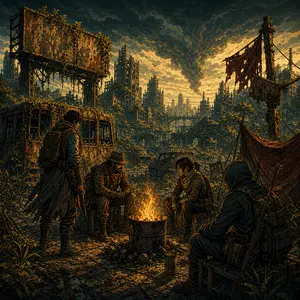





Origins of task force naming
Task force names live in the gap between paperwork and legend. Real units are often born from jurisdiction disputes, funding lines, and dry committee language, yet the names that survive in fiction are the ones that turn all of that into something sharp enough to remember. A good label hints at whether the team answers to a ministry, a joint command, a private contractor, or a coalition that wants deniability more than applause. Black-budget programs favor cold nouns. Maritime groups lean on tides, channels, and beacons. Urban manhunt teams borrow civic and transit vocabulary. Scientific containment cells often sound sanitized on purpose. Colors, saints, numbers, weather, and industrial terms matter because they imply a culture behind the badge. When you name a task force well, you are not merely branding a unit. You are suggesting who funded it, who fears it, what kinds of orders it follows, and how much damage the state is willing to hide when the operation goes bad. That is why the right codename can carry as much worldbuilding weight as a base, a uniform, or a signature weapon.
How to pick a name that sounds operational
Start with the mission profile
Begin with what the unit actually does when the phone rings. A breaching team, a maritime interdiction squad, a fugitive-hunting desk, and an extraction detail should not sound interchangeable. If the crew cuts through doors and seizes contraband, harder words such as breach, hammer, lock, and quarry make sense. If the team lives inside metadata and signal traffic, relay, patch, lattice, and protocol feel more convincing. Mission profile is the fastest way to keep a name from becoming generic.
Decide who coined the label
Next ask who named the unit. Field operators invent shorter, harsher nicknames that are easy to shout in motion. Civil servants prefer clipped administrative language that looks safe on a memo. Intelligence handlers like project titles that can hide in plain sight. Politicians prefer names that sound decisive on camera while revealing nothing concrete. That difference matters. Task Force Nightglass sounds like it came out of a classified corridor. Safe Harbor reads like a rescue program designed for briefings and press lines.
Add scale, secrecy, and geography
Finally think about jurisdiction. A local warrant squad should not sound like a continental counterinsurgency office, and a border militia unit should not read like a laboratory seal team. Geography helps. Harbor, ridge, borough, basin, and border place the unit in a world immediately. So do markers of secrecy. Joint Meridian suggests interagency cooperation. Quiet Frontier suggests plausible deniability. One extra word can tell the reader whether the team is official, improvised, feared, or already half-disowned by its sponsors.
Institutional identity and narrative weight
Task force names carry moral temperature. A democratic agency trying to sound accountable may choose transparent, procedural language, while an authoritarian ministry might prefer abstract, intimidating titles that turn violence into policy. Superhero fiction uses the same logic. A benevolent response team may sound aspirational, while a black-site detention unit should sound euphemistic or stripped of humanity. Once you pick a name, let it shape behavior around the unit. Reporters shorten it. Civilians mishear it. Rival agencies mock it. Operators wear it like a patch or avoid saying it aloud. A strong task force name does not exist in isolation. It changes how memos are written, how rumors spread, how suspects panic, and how the team imagines itself when the mission collapses. That is why these names do more than add surface flavor. They can define an institution before you ever describe the building, the uniform, or the command structure. If the name feels like it belongs on a briefing slide, an evidence bag, and a whispered warning, it is probably carrying the right weight.
Tips for writers
- Match the diction to the sponsor. Defense ministries, police bureaus, contractors, rebels, and superhero coalitions all name units differently.
- Use one concrete anchor such as harbor, ridge, borough, relay, or ledger so the name implies jurisdiction and method at the same time.
- Let public titles and internal call signs diverge if the story benefits from bureaucracy, propaganda, or compartmentalization.
- Reserve numbers for units that need procedural realism, not every squad, or the roster will start to sound like placeholder copy.
- Test the name in the mouth of the character who says it most often, commander, reporter, terrified witness, or exhausted operator.
Inspiration prompts
Use these questions to turn any generated result into an institution with history, doctrine, and internal tension.
- What disaster or scandal forced this task force into existence?
- Which agency officially owns the unit, and which partner agencies resent its authority?
- What part of the name is a cover story, and what part quietly reveals the real mission?
- How do civilians, targets, and field operators each shorten or distort the name?
- What happens to the team when the political sponsor who protected it disappears overnight?
Frequently Asked Questions
Explore the most common questions about the Task Force Name Generator and how to turn each result into a credible covert team, strike unit, or interagency program.
How does the Task Force Name Generator work?
Each click pulls from a large pool of hand-written operational names shaped around covert raids, rescue work, cyber surveillance, maritime action, containment, and joint-agency language.
Can I steer the generator toward a specific kind of unit?
Yes. Generate several options, then keep the names whose vocabulary matches your mission profile, sponsor, and geography. The strongest fit usually appears once the unit role is clear.
Are the task force names varied enough for different genres?
They are designed for thrillers, military fiction, superhero command structures, cyberpunk enforcement teams, and modern tabletop campaigns rather than one narrow tone.
How many task force names can I generate?
You can keep generating as long as you need, then shortlist the labels that sound right for your world, briefing room, or intelligence file.
How do I keep the names I want to reuse?
Copy the result immediately, or save a shortlist of favorites so you can compare which names best match the chain of command and threat level in your setting.
What are good Task force names?
There's thousands of random Task force names in this generator. Here are some samples to start:
- Task Force Nightglass
- Breach Gate Unit
- Undertow Channel Cell
- North Ledger Desk
- Task Force Cipherharbor
- Concrete Precinct Unit
- Guardian Meridian Desk
- Glass Threshold Unit
- Marshal Harbor Desk
- Task Force Frontierhush
About the creator
All idea generators and writing tools on The Story Shack are carefully crafted by storyteller and developer Martin Hooijmans. During the day I work on tech solutions. In my free hours I love diving into stories, be it reading, writing, gaming, roleplaying, you name it, I probably enjoy it. The Story Shack is my way of giving back to the global storytelling community. It's a huge creative outlet where I love bringing my ideas to life. Thanks for coming by, and if you enjoyed this tool, make sure you check out a few more!
Embed on your website
To embed this idea generator on your website, copy and paste the following code where you want the widget to appear:
<div id="story-shack-widget"></div>
<script src="https://widget.thestoryshack.com/embed.js"></script>
<script>
  new StoryShackWidget('#story-shack-widget', {
    generatorId: 'task-force-name-generator',
    generatorName: 'Task Force Name Generator',
    generatorUrl: 'https://thestoryshack.com/tools/task-force-name-generator/',
    language: 'en'
  });
</script>