More generators, writing tools and storytelling resources.
Why Split Fiction worlds feel bigger than one genre
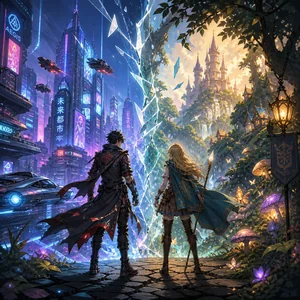
Split Fiction thrives on the thrill of stepping from one imaginative logic into another without losing momentum. A realm can begin as a velvet storybook forest, then suddenly reveal a gravity elevator, a paper moon port, or a combat arena suspended inside a draft revision. That tonal layering is the reason a strong world name matters so much here. The name has to suggest wonder, danger, and a little conceptual mischief all at once. A result like Mythexpanse Labyrinth or Mirrorvault Harbor does more than label a map. It hints that the place might be ancient and synthetic, magical and programmable, intimate and cosmic. The best names feel like two writers left their fingerprints on the same skyline, which is exactly the energy a co-op adventure setting needs when it wants every new zone to feel like a revelation.
How to pick a name that opens a playable realm
Look for the collision point
Start by deciding which two story languages are colliding in your current chapter. Maybe you want chivalric fantasy meeting neon simulation design, or a forgotten moon kingdom colliding with an editorial machine-city made of indexes and stage cues. When you browse generated names, listen for the point where those ideas overlap. Portal Strand feels airy and exploratory. Crossover Ring sounds engineered and ceremonial. Inkspire Expanse suggests myth written into architecture. Choose the name that captures the exact seam where your realm changes from familiar to impossible, because that seam is where the scene will feel most alive to players and readers.
Match the scale to the chapter
Not every world name has to carry the same weight. Some should sound like entire story-realms, suitable for a major act, while others feel like districts, sanctums, or orbiting fragments inside a larger narrative machine. If your heroes are arriving at a one-session detour, a compact title like Twistgate Dome or Starlit Spires can imply a strong identity without demanding a whole atlas. If the realm is meant to anchor an emotional arc, reach for something broader like Moonlit Reaches or Sunken Kingdom. The scale hidden inside the name helps you control pacing. Smaller names create focus, larger names promise long histories, side quests, rival factions, and dramatic reveals.
Let the name carry the rule of the place
A Split Fiction setting becomes memorable when each realm seems to operate by one strange rule. Maybe memories are physical bridges. Maybe every castle is projected by a satellite choir. Maybe a volcanic canyon rewrites dialogue spoken inside it. The world name can quietly communicate that rule before you explain anything. Mirrorvault Harbor implies reflection, storage, and hidden selves. Twinned Plot Orbit suggests dual narratives circling the same fate. Mythexpanse Labyrinth feels endless, ceremonial, and slightly unstable. When a name implies mechanics, you get free storytelling leverage, because the audience starts imagining puzzles, hazards, and character choices before the briefing even begins.
Why world names shape identity in a co-op adventure
In a meta-fictional co-op story, realms are not just scenery. They are arguments between moods, genres, and personal obsessions. One protagonist may see a place as a fairy-tale inheritance, while the other reads it as a system to hack, map, or survive. A good world name can hold both readings without collapsing into nonsense. That is why the most effective results feel layered instead of random. They give you a banner, but also a philosophy. They tell you how locals might swear, what ruins might be worshipped, how mission objectives could be framed, and what kind of soundtrack the room almost deserves. Naming the world well makes every prop, threat, and emotional beat easier to align, because the title becomes the compact thesis of the realm.
Tips for writers and game masters
- Pair each generated name with one impossible image, such as a knight ferry crossing a data sea, so the realm becomes visual immediately.
- Decide whether locals treat the name as sacred, commercial, or improvised, because pronunciation and reverence change the social texture fast.
- Give the realm one signature contradiction, such as pastoral meadows guarded by defense drones, and let the name reinforce that tension.
- Test the name beside mission titles, faction names, and item drops to see whether it belongs to the same imaginative ecosystem.
- Keep one softer option and one grander option from each session, then choose based on whether the next scene needs intimacy or spectacle.
Inspiration prompts for your next realm
Use these questions to turn a generated name into a setting with motion, memory, and stakes.
- What event caused this world to merge fantasy logic with synthetic or sci-fi architecture?
- Which landmark inside the realm is beautiful from afar but terrifying up close?
- What do residents believe the world was called before the current name took hold?
- How does the realm change when two protagonists disagree about what kind of story they are inside?
- What treasure, confession, or betrayal could only happen in this specific place?
Frequently Asked Questions
Explore the most common questions about the Fiction World Name Generator (Split Fiction) and how it can help you name wondrous, unstable, genre-bending realms.
How does the Fiction World Name Generator (Split Fiction) work?
The generator blends fantastical imagery, sci-fi structural cues, and meta-fictional vocabulary so each result feels ready for a surreal world, kingdom, sector, or narrative pocket.
Can I steer the results toward fantasy or sci-fi?
Yes. Generate several options, then keep the names that emphasize the side you need most, whether that is mythic grandeur, digital strangeness, or a balanced hybrid tone.
Are the generated world names unique?
The pool is broad enough to produce many distinctive combinations, and you can always refine a favorite by pairing it with your own lore, factions, and visual motifs.
How many world names can I generate?
You can generate as many names as you like, which makes it easy to brainstorm a whole sequence of realms for one campaign, chapter arc, or boss route.
How do I save my favorite results?
Click a name to copy it instantly, or use the heart icon to keep a shortlist of world names you want to build into maps, quests, and story beats.
What are good Split Fiction world names?
There's thousands of random Split Fiction world names in this generator. Here are some samples to start:
- Mythexpanse Labyrinth
- Mirrorvault Harbor
- Twinned Plot Orbit
- Inkspire Expanse
- Starlit Spires
- Portal Strand
- Crossover Ring
- Twistgate Dome
- Moonlit Reaches
- Sunken Kingdom
About the creator
All idea generators and writing tools on The Story Shack are carefully crafted by storyteller and developer Martin Hooijmans. During the day I work on tech solutions. In my free hours I love diving into stories, be it reading, writing, gaming, roleplaying, you name it, I probably enjoy it. The Story Shack is my way of giving back to the global storytelling community. It's a huge creative outlet where I love bringing my ideas to life. Thanks for coming by, and if you enjoyed this tool, make sure you check out a few more!

 Saved ideas
  Alien: Earth
 Apex Legends
 Assassin's Creed
 Babylon 5
 Battlestar Galactica
 Clair Obscur
 Cyberpunk 2077
 Cyberpunk RED
 Cyberpunk
 DC Universe
 Destiny
 Dieselpunk
 Doctor Who
 Dune
Dune Dystopia
 Eclipse
 EVE Online
 The Expanse
 Fallout
 Fortnite
 Halo
Halo Helldivers
 Horizon Zero Dawn
 Invincible
 Lancer
 Marvel Universe
 Mass Effect
 Mecha
Mecha No Man's Sky
 Overwatch
 Shadowrun
 Space Opera
 Split Fiction
 Star Trek
 Star Wars
 Starfinder
 Stargate
 The Culture
 The Last of Us
 Things from the Flood
 Tides of Annihilation
 Transformers
 Valorant
 Voltron
 Warhammer 40K
 Wildstar