More generators, writing tools and storytelling resources.
Names for the Move Only Two People Can Trigger
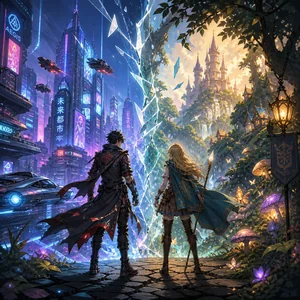
Companion ability names in a Split Fiction style setting do more than label an attack. They explain the relationship behind the spectacle. A move name like Rift Relay, Mirror Convergence, or Ink Torrent immediately suggests cooperation, timing, and shared risk. That matters in a world where fantasy spellcraft can collide with sci-fi interface logic, where one partner may channel mythic force while the other stabilizes it through technology, memory, or tactical rhythm. The best companion abilities sound like something the characters earned together. They should imply that the move is impossible for either person alone, whether that impossibility comes from emotional trust, mechanical interlock, mirrored talents, or a precise handoff in the middle of chaos. When you generate names for these abilities, you are really naming a bond under pressure. The result can feel flashy, but it should also hint at why the pair works, what they sacrifice, and what kind of scene would justify pulling that move out at the perfect second.
Using Generated Companion Ability Names
Combo finishers and duo ultimates
Some companion abilities exist to end a phase, break a shield, or turn a losing battle into a cinematic push. These are the moves that deserve names with momentum and impact. A result like SpineLock sounds precise and brutal, while Chapter of Chapters feels mythic, almost like a finishing technique that rewrites the fight itself. For co-op combat systems, strong duo ultimate names tell the player exactly why both characters matter in the moment. One may set the target, one may amplify the payload, and the title binds those actions into one memorable effect. If you are writing a cutscene, the right ability name also gives the scene a line of dialogue, a HUD callout, or a moment of crowd reaction that makes the payoff land harder.
Swap mechanics, mirrored skills, and rescue tools
Not every companion ability needs to be a finisher. Some of the most useful names describe motion, rescue, cover, or role reversal. Mirror the Spine could suit a move where one partner copies the other's stance to stabilize a corrupted zone. Patient Cue could be a timing-based assist that pauses danger for half a breath while the other hero completes the key action. Names in this category should sound responsive rather than purely explosive. They belong to teleport swaps, shared shields, tether pulls, synchronized reloads, magical redirects, and improvised saves where one character catches the other before the level, story, or mission collapses. In game design terms, these are the names that teach coordination. In story terms, they show the quiet competence that makes the larger emotional moments believable.
Relationship beats and emotional reveals
Companion abilities are especially useful because they can carry emotional subtext without slowing the action down. A newly unlocked move after an argument should not sound like the same technique the pair used when they barely trusted each other. Colophon Trap might fit a duo that weaponizes unfinished stories and hidden endings. Gutter Seal could suit characters who protect each other by closing the cracks in damaged worlds. If the central appeal of Split Fiction is collision, then companion abilities are where collision becomes intimacy. The move name can show whether the pair is playful, disciplined, reckless, protective, romantic, sibling-like, or painfully dependent. That is why a generator helps. It gives you options that are energetic enough for gameplay, but suggestive enough for narrative arcs built around reconciliation, sacrifice, and the joy of finally moving in sync.
Why Companion Ability Names Matter
A memorable companion ability name does worldbuilding in a very compact form. It tells the audience how powers are understood in the setting, whether the world prefers ritual language, tactical shorthand, poetic symbolism, or a mix of all three. It also tells us how visible partnership is inside the fiction. If characters publicly announce their shared moves, then ability names become part of culture, reputation, and myth. Rivals learn to fear them, allies cheer for them, and villains may try to split the pair apart before the move can trigger. In a game, the name has a practical job too. It has to look good in a menu, fit in UI callouts, sound good in voice-over, and remain memorable after repeated use. The strongest names achieve all of that while still feeling personal. They do not just say this move is powerful. They say this move belongs to these two people, to their history, and to the exact kind of impossible challenge they survive together.
Tips for Writers and Designers
- Let the noun carry the effect, then let the modifier carry the relationship, tone, or genre blend.
- Use sharper, faster names for panic tools and finishers, and more deliberate names for support, rescue, or setup abilities.
- If the pair mixes magic and technology, reflect both halves through words that suggest flow and control at the same time.
- Reserve your most dramatic names for abilities unlocked after a major emotional shift, confession, betrayal, or reunion.
- Read the result aloud as if it were a combat callout, because companion ability names need rhythm as well as imagery.
- Pair the generated name with an animation concept, cooldown rule, or story memory so the move feels earned instead of decorative.
Inspiration Prompts
Use these questions to turn one generated name into a full co-op mechanic, set piece, or relationship-defining moment.
- What does each partner contribute to this ability, power source, timing, emotional trigger, or physical position?
- Why could neither hero perform the move alone, and what failure taught them that lesson first?
- What visual contrast defines the move, ink and light, steel and starlight, spell circles and targeting grids, or something stranger?
- Who first witnessed the technique and understood that the pair had become more dangerous together than apart?
- What cost, cooldown, or emotional consequence keeps this move from becoming an easy solution every time?
Frequently Asked Questions
Explore the most common questions about the Split Fiction Companion Ability Name Generator and how it can help you build flashy, heartfelt, co-op ready signature moves.
How does the Split Fiction Companion Ability Name Generator work?
Click Generate to receive a companion ability name inspired by duo ultimates, mirrored skills, linked gadgets, fantasy spells, rescue techniques, and emotional crossover teamwork.
Can I use these names for both gameplay systems and story scenes?
Yes. The results fit combat abilities, cooperative mechanics, boss finishers, skill trees, cinematic reveals, fan fiction scenes, and tabletop move lists.
Are the generated companion ability names unique?
They are designed for variety, blending action, intimacy, genre contrast, and gameplay energy so it is easier to find names that feel distinct across many different pairs.
How many companion ability names can I generate?
You can generate as many as you want, which is useful when testing alternate move sets, naming relationship milestones, or building a whole library of co-op techniques.
How do I save my favorite companion ability names?
Use the copy feature or your browser tools to keep the results you like, then sort them into notes, design docs, campaign sheets, or scene outlines for later use.
What are good Split Fiction abilities?
There's thousands of random Split Fiction abilities in this generator. Here are some samples to start:
- Rift Relay
- SpineLock
- Mirror the Spine
- Ink Torrent
- Patient Cue
- Colophon Trap
- Chapter of Chapters
- Gutter Seal
- Mirror Convergence
- Foliolocked Wave
About the creator
All idea generators and writing tools on The Story Shack are carefully crafted by storyteller and developer Martin Hooijmans. During the day I work on tech solutions. In my free hours I love diving into stories, be it reading, writing, gaming, roleplaying, you name it, I probably enjoy it. The Story Shack is my way of giving back to the global storytelling community. It's a huge creative outlet where I love bringing my ideas to life. Thanks for coming by, and if you enjoyed this tool, make sure you check out a few more!

 Saved ideas
  Alien: Earth
 Apex Legends
 Assassin's Creed
 Babylon 5
 Battlestar Galactica
 Clair Obscur
 Cyberpunk 2077
 Cyberpunk RED
 Cyberpunk
 DC Universe
 Destiny
 Dieselpunk
 Doctor Who
 Dune
Dune Dystopia
 Eclipse
 EVE Online
 The Expanse
 Fallout
 Fortnite
 Halo
Halo Helldivers
 Horizon Zero Dawn
 Invincible
 Lancer
 Marvel Universe
 Mass Effect
 Mecha
Mecha No Man's Sky
 Overwatch
 Shadowrun
 Space Opera
 Split Fiction
 Star Trek
 Star Wars
 Starfinder
 Stargate
 The Culture
 The Last of Us
 Things from the Flood
 Tides of Annihilation
 Transformers
 Valorant
 Voltron
 Warhammer 40K
 Wildstar