More generators, writing tools and storytelling resources.
Why species designations matter in Eclipse
Alien species names in Eclipse do more than identify life-forms. They tell you who discovered the organism, who profited from the discovery, and who was frightened enough to start naming it before they understood it. A clean taxonomic label suggests surveillance, funding, and laboratory procedure. A frontier term sounds like it was coined by miners, scavengers, or militia crews who only had seconds to describe what came out of the dark. A ceremonial demonym, by contrast, hints that the species is not merely a specimen but a civilization with memory, politics, and its own idea of dignity. That tension is where the best designations live. The right phrase can sound clinical on paper, predatory over comms, and strangely beautiful when spoken by someone who has crossed half a sector to hear how the species names itself.
How to choose the right designation
Filed by xenobiologists
If the label belongs in a corporate science report or a sealed university archive, let it feel methodical. Good xenobiology designations often imply morphology, habitat, or observed behavior. Terms such as strain, pelagic, minor, terrene, aerial, and noctis suggest the kind of disciplined shorthand researchers use when the official answer has not yet stabilized. These names work especially well for catalog entries, autopsy records, specimen crates, and briefing decks where the audience values precision over poetry. In Eclipse, a scientific designation should sound like somebody measured the organism, extracted a tissue sample, assigned a threat marker, and still went home uneasy.
Used on the frontier
Frontier slang bends faster than formal taxonomy. Traders, private security crews, dockworkers, and salvage pilots do not wait for peer review. They create labels that can be shouted across a landing pad or scribbled onto a fuel-stained invoice. That means a designation may compress, mutate, or pick up a hostile nickname over time. The official report might call a species Heliosilicis Pelagic, while everyone working the bad moons simply calls them glass-tide sleepers. Using both versions gives your setting depth. One term belongs to procurement officers and insurance investigators. The other belongs to people who have seen what the species does when floodlights fail.
Adopted by the species itself
Some of the most powerful designations are the ones filtered through translation. An alien culture may accept the human label for trade, reject it in diplomatic chambers, or answer with a self-chosen demonym whose meaning is far older than any survey map. This generator is useful because it can suggest both imposed nomenclature and names with a more self-possessed cadence. If you want first contact to feel tense, let the official classification and the species' preferred designation disagree. That single mismatch can imply colonial arrogance, mistranslation, or a buried history of conflict that nobody in the room wants to summarize aloud.
The weight carried by a label
In noir science fiction, naming is never neutral. A designation can reduce a people to a threat profile, turn a biosphere into an asset class, or hide atrocity behind sterile terminology. When a corporation calls a sentient species a strain, it reveals more about the corporation than the species. When smugglers use a soft, affectionate nickname for something the navy classifies as hazardous, it tells you who actually lives with the risk. Build that pressure into every result you keep. Ask whether the term sounds confiscated, negotiated, feared, or earned. The answer shapes entire scenes. A customs officer, field medic, dissident scholar, and alien elder should not all say the same name with the same meaning. Eclipse thrives when language exposes unequal power.
Tips for writers and referees
- Match the designation style to the source: lab records should sound systematic, while frontier slang should sound practical, compressed, and a little superstitious.
- Pair one official term with one informal nickname so different factions reveal themselves by the words they choose under pressure.
- Let suffixes such as aerial, pelagic, minor, or strain imply habitat, hierarchy, mutation, or incomplete understanding without stopping for exposition.
- Use elegant demonyms for diplomacy and ceremonial scenes; use clipped designations for alarms, cargo tags, and classified incident reports.
- If a label feels too clean, add a trace of dread through context: quarantine markers, failed expeditions, vanished crews, or restricted annexes.
Inspiration prompts
Use these questions to decide what kind of designation belongs in your version of Eclipse.
- Was this species first named by a careful xenobiologist, a frightened colony militia, or a procurement office that cared only about extraction value?
- Does the official designation describe anatomy, habitat, behavior, or an early misunderstanding that later became permanent?
- What do rogue traders call the species when they are far from regulated ports and speaking to people who have survived an encounter?
- How does the species refer to itself, and what political insult or diplomatic concession hides inside the translation?
- Which version of the name appears in autopsy notes, black-market rumor, and a peace treaty, and why are those three versions different?
Frequently Asked Questions
Explore the most common questions about the Alien Species Designation Generator and how it helps you label ominous life-forms, dossiers, and first-contact records.
How does the Alien Species Designation Generator work?
It creates original hard-sci-fi species labels inspired by xenobiology terminology, frontier slang, and elegant demonyms, giving each click a different balance of science, dread, and discovery.
Can I choose what kind of designation I want?
Not directly, but repeated generations surface clinical labels, corporate catalog terms, and more atmospheric species names, so you can keep rolling until the tone fits your file or faction.
Are the results unique?
The generator is designed for strong variety across morphology cues, habitat markers, and naming textures, so results feel distinct even when they belong to the same universe.
How many designations can I generate?
You can generate as many alien species designations as you need for dossiers, campaigns, encounter tables, or archive entries, with no practical limit on rerolls.
How do I save my favorite designations?
Click any result to copy it instantly, then use the heart icon to keep the best labels nearby while you build reports, factions, and alien case files.
What are good alien species designations?
There's thousands of random alien species designations in this generator. Here are some samples to start:
- Chlorovora Zyphoferris Aerial
- Aerolax Cyberumbra Strain
- Stratonex Bioflorens Strain
- Biodion Vireaeris Minor
- Pluviodion Cyberventus
- Biophyte Magnoaqua Pelagic
- Luminathon Radiflorens Strain
- Xalrius Heliosilicis Aerial
- Mirinex Pelagiferris Aerial
- Xalthid Terrinoctis Terrene
About the creator
All idea generators and writing tools on The Story Shack are carefully crafted by storyteller and developer Martin Hooijmans. During the day I work on tech solutions. In my free hours I love diving into stories, be it reading, writing, gaming, roleplaying, you name it, I probably enjoy it. The Story Shack is my way of giving back to the global storytelling community. It's a huge creative outlet where I love bringing my ideas to life. Thanks for coming by, and if you enjoyed this tool, make sure you check out a few more!

 Saved ideas
  Alien: Earth
 Apex Legends
 Assassin's Creed
 Babylon 5
 Battlestar Galactica
 Clair Obscur
 Cyberpunk 2077
 Cyberpunk RED
 Cyberpunk
 DC Universe
 Destiny
 Dieselpunk
 Doctor Who
 Dune
Dune Dystopia
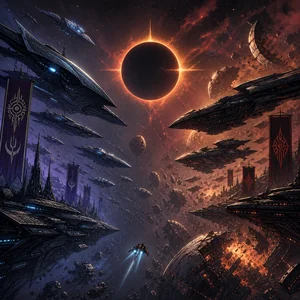 Eclipse
 EVE Online
 The Expanse
 Fallout
 Fortnite
 Halo
Halo Helldivers
 Horizon Zero Dawn
 Invincible
 Lancer
 Marvel Universe
 Mass Effect
 Mecha
Mecha No Man's Sky
 Overwatch
 Shadowrun
 Space Opera
 Split Fiction
 Star Trek
 Star Wars
 Starfinder
 Stargate
 The Culture
 The Last of Us
 Things from the Flood
 Tides of Annihilation
 Transformers
 Valorant
 Voltron
 Warhammer 40K
 Wildstar