More generators, writing tools and storytelling resources.
The Origins and Lore of Egyptian Curses
Ancient Egyptians believed that the tomb was not an endpoint but a threshold. The dead continued to need protection, sustenance, and respect. Tomb curses served as spiritual security systems, inscribed on stelae, painted on lintels, or spoken during the Opening of the Mouth ritual. Unlike generic horror spells, Egyptian curses were precise. They named the offender, identified the divine witness, described the affliction in bodily terms, and often hinted at the specific sacred object that could undo the damage. This precision reflected the Egyptian worldview that ma'at, cosmic order, could be disrupted by sacrilege and restored only through correct ritual action.
The generator reflects this structure. Every result includes a target, a named affliction drawn from the Egyptian pantheon, and the protective amulet that breaks the spell. You might encounter the wasting sickness of Set, the serpent coil of Wadjet, or the mirrored death of Nephthys. Against each stands a countermeasure: the scarab of Hathor, the turquoise serpent wand of Meretseger, or the onyx nekhakha fan of Shu. These pairings are rooted in actual religious symbolism, from the protective wedjat eye to the resurrection amulet of Osiris.
How to Use These Curses
For Fiction Writers
Novelists and short-story authors can use generated curses as plot engines. A curse is not merely a punishment; it is a contract written in divine ink. Embed the transgression early in your narrative, let the affliction escalate through the second act, and resolve the crisis when your protagonist discovers the correct amulet. The specificity of Egyptian cursed lends itself to historical fiction, archaeological thrillers, and supernatural mysteries set against the backdrop of the Nile.
For Tabletop Role-Playing Games
Game masters running campaigns in mythic Egypt, pulp adventure, or modern occult settings will find ready-to-use mechanical hooks. Assign the curse as a lingering condition after a player disturbs a tomb. Track the progression from minor symptoms to life-threatening manifestations. Reward research rolls by revealing the protective amulet, then send the party on a quest to recover it from a rival collector, a hidden temple, or the black market of Cairo.
For Creative Research and Worldbuilding
Worldbuilders constructing fantasy cultures influenced by ancient Egypt can treat these curses as religious law. Each curse reveals social taboos, the hierarchy of priests, and the material culture of protection. The presence of a specific amulet in a household might indicate the family's past sins, while a tomb inscription warns future generations against repeating ancestral mistakes.
Cultural Weight and Identity
Egyptian curses carry weight because they emerge from a culture that took the afterlife seriously. The mummy, the canopic jars, the false door, and the offering table were not props but necessities. A curse threatened not only the body but the ka, the ba, and the ability to reach the Field of Reeds. The protective amulets were equally serious. The ankh, the djed pillar, and the Eye of Horus were not decorative; they were technologies of survival. Using these curses in your work means engaging with a civilization that viewed death as a continuation demanding respect, preparation, and constant vigilance against chaos.
Practical Tips for Working with Egyptian Curses
- Match the curse severity to the transgression. Stealing linen might bring the weeping thread of Neith, while defacing a pharaoh's cartouche could trigger the blotted identity of Thoth.
- Use the amulet as a narrative MacGuffin. If your character knows the cure but cannot reach it, tension escalates naturally.
- Vary the witnesses. Priests, tomb guardians, village midwives, and even skeptical investigators can deliver or discover curses.
- Consider bloodline curses for generational sagas. The curse passes from ancestor to descendant, making the amulet a family heirloom.
- Blend historical detail with imagination. Real execration texts existed; use them as templates, then expand.
Inspiration Prompts
- A Victorian photographer develops plates that show invisible curses. Which amulet clears the lens?
- A modern Egyptian family discovers their ancestor opened a sealed niche. The dark-seeing eye of Set haunts their children. Where is the vision-plate of Horus?
- A tabletop party disturbs the tomb of a heretic pharaoh. Every sunrise brings the burning brow of the Aten closer. Can they find the cool-disk pendant before the third dawn?
- A museum conservator unwraps a cursed mummy shroud. The second skin of Osiris begins to wrap her legs at night. She must trace the natron-powder amulet of Anubis to its last known owner.
- A child in Giza steps on a pyramid shadow and catches the backward sun of Ra. Only the red jasper sun-disk of Amun-Ra, lost in a souk fire fifty years ago, can turn the shadow forward.
Frequently Asked Questions
What makes Egyptian curses different from generic fantasy curses?
Egyptian curses are specific contracts. They name the transgressor, the divine witness, the bodily affliction, and the exact amulet required to break the spell. This precision reflects ancient Egyptian religious law and the concept of ma'at, or cosmic order, which must be actively maintained through correct ritual action.
Can I use these curses in commercial fiction or games?
Yes. All generated content is provided as idea prompts for creative use. You may adapt, expand, or rewrite any curse for novels, short stories, tabletop campaigns, video games, or screenplays without attribution.
Are the amulets and afflictions historically accurate?
The amulets and divine names draw from authentic Egyptian symbolism, including the ankh, wedjat, djed pillar, and deities such as Isis, Osiris, Thoth, and Sekhmet. While the specific curse combinations are invented for creative use, their components reflect actual religious artifacts and beliefs.
How do I choose the right curse for my story?
Match the severity of the curse to the severity of the transgression. Minor thefts might bring discomfort or confusion, while desecration of a royal tomb could trigger lethal afflictions. Consider the personality of the divine witness and how the required amulet can drive your plot forward as a sought-after artifact.
Does every curse include a way to break it?
Yes. Every generated result includes a specific protective amulet or ritual action that can break the spell. This design supports narrative structure by giving protagonists a tangible goal: find the correct amulet, perform the proper rite, and restore ma'at.
What are good Egyptian Curse?
There's thousands of random Egyptian Curse in this generator. Here are some samples to start:
- The priest of Amun curses any thief who disturbs the pharaoh's inner chamber with the wasting sickness of Set, yet the scarab of Hathor dissolves the doom when pressed against the tomb seal.
- Touch the sarcophagus lid and the embalmer's chant binds eternal thirst to your tongue, but the lotus pendant of Nephthys breaks the affliction at dawn.
- The Nubian guard testified that the intruder clawed at his own eyes after entering the antechamber, crying out that only the obsidian mirror of Hathor could show him the way back to light.
- The village healer of Abu Sir recommends swallowing the dust of the pyramid brick mixed with honey to break the curse of the stomach-stone of Geb, and the natron-powder amulet of Anubis confirms the cure when worn on the chest.
- The red ochre ankh painted backward above the tomb binds the curse of the reversed life of Isis to the viewer, and the correctly drawn ankh of turquoise paste restores the pulse.
- The demon of the tomb offers three days of perfect health in exchange for accepting the curse of the withered hand of Ra, but the golden sun-fist amulet of Amun-Ra breaks the contract at the first sunrise.
- The new owner of the canopic jar from Saqqara found herself afflicted with the curse of the preserved organ theft of Duamutef, and the silver jar amulet of Qebehsenuef placed on her dresser returned the phantom liver to its place.
- The Nubian variant tells that the curse of the dark-seeing eye of Set befalls those who enter the pyramid from the south, and the lapis lazuli vision-plate of Horus restores natural sight when presented at the southern gate.
- The French rationalist argued that the curse of the withered hand of Ra was merely nerve damage, yet when he touched the pharaoh's ring his own fingers curled, and the golden sun-fist amulet of Amun-Ra restored them only after he confessed.
- The schoolchildren of Giza whisper that anyone who steps on the pyramid shadow catches the curse of the backward sun of Ra, and the red jasper sun-disk of Amun-Ra thrown into the air turns the shadow forward again.
About the creator
All idea generators and writing tools on The Story Shack are carefully crafted by storyteller and developer Martin Hooijmans. During the day I work on tech solutions. In my free hours I love diving into stories, be it reading, writing, gaming, roleplaying, you name it, I probably enjoy it. The Story Shack is my way of giving back to the global storytelling community. It's a huge creative outlet where I love bringing my ideas to life. Thanks for coming by, and if you enjoyed this tool, make sure you check out a few more!

 Saved ideas
  African Mythology
 Animal Crossing
 Arabian Mythology
 Arcane
 Avowed
 Aztec Mythology
 Baldur's Gate 3
 Black Myth: Wukong
 Blades in the Dark
 Bloodborne
 Brindlewood Bay
 Call of Cthulhu
 Cartography
 Celtic Mythology
 Changeling
 Chinese Mythology
 Chronicles of Narnia
 Civilization
 Clash of Clans
 Conlangs
 Cosmere
 Cosmic Horror
 Cozy Fantasy
 Cradle
 Creatures
 Crescent City
 Cryptids
 Cult of the Lamb
 Cultivation
 Daggerheart
 Dark Souls
 Demon: The Fallen
 Diablo
 Discworld
 Disney
 Dota 2
 Dragon Age
 Dragons
 Dungeons & Dragons
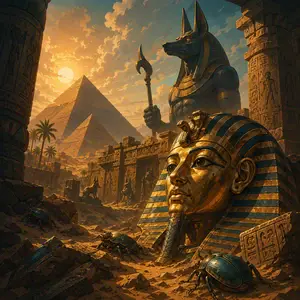 Egyptian Mythology
 Elden Ring
 Elder Scrolls
 Eternal Strands
 Fae
Fae Final Fantasy
 Game of Thrones
 Genshin Impact
 God of War
 Gothic Horror
 Greek Mythology
 Guild Wars
 Hades II
 Hades
Hades Harry Potter
 Hindu Mythology
 His Dark Materials
 Hollow Knight
 Horror
 Indonesian myth
 Inheritance Cycle
 Japanese myth
 Korean Mythology
 League of Legends
 Legend of Zelda
 Legends of Runeterra
 LitRPG
 Lord of the Rings
 Lost Ark
 Magic: The Gathering
 Mayan Mythology
 Mesopotamian myth
 Minecraft
 Mistborn
 Monster Hunter
 Mythology
 Norse Mythology
 Path of Exile
 Pathfinder
 Percy Jackson
 Persian Mythology
 Pirate Borg
 Religion
 Rift
Rift RuneScape
 Sea of Thieves
 Sekiro
 Shadowdark
 Slavic Mythology
 Stardew Valley
 Steampunk
 Stonetop
 Stormlight Archive
 Tainted Grail
 The Dark Crystal
 The Dark Eye
 The Wheel of Time
 The Wildsea
 The Witcher
 Vampire: Masquerade
 Wakfu/Dofus
 Warhammer
 Werewolf Apocalypse
 Wings of Fire
 World of Darkness
 World of Warcraft
 Wuchang
 Wuxia
Wuxia Xianxia