Origins: what game titles signal
Game titles are marketing, UX, and worldbuilding at the same time. They help players guess genre, difficulty, and emotional palette in a single glance, whether they see the name on a store grid, a trailer thumbnail, or a friend’s wishlist screenshot. A strong title is readable fast, easy to repeat out loud, and specific enough that it couldn’t belong to ten other games. That specificity can come from a distinctive keyword, a rhythm, or a subtle promise of what the player will do.
Picking and polishing a title
Start with the core fantasy
Before you fall in love with a clever word, write a one-line promise for your game. “Short runs, get stronger,” “solve a quiet town mystery,” or “build a tiny farm that feels like home.” The promise tells you what vocabulary you can steal from: action verbs, textures, places, tools, or emotions. Then generate a pile of titles and highlight the ones that match the promise without explaining too much.
Design for store lists
Most players meet your title in a list. Long names get truncated, and punctuation can become visual noise. Put three candidates on one line, squint, and see which one still reads. Next, say each title twice, at normal speaking speed. If it’s awkward for you, it will be awkward for streamers, podcasts, and word-of-mouth recommendations.
Plan for sequels
If you might ship DLC or a sequel, pick a title structure that can stretch. Numbering and subtitles are fine, but avoid locking yourself in with words like “final” unless the story truly ends. Think about how the name will look when you add an episode label, a season, or an expansion tagline.
Identity: tone, genre, and audience
Genre language is real. Strategy games tolerate institutional words, horror prefers sharp and tense sounds, cozy games lean warm and domestic, and sci-fi can handle technical terms. You can subvert those signals, but do it deliberately: meet expectations first, then add your twist with one surprising word. When in doubt, ask whether a stranger could guess your genre after reading only the title.
Tips for writers and designers
- Collect 10–20 candidates before narrowing.
- Keep one distinctive keyword tied to your setting or mechanic.
- Avoid hard-to-spell invented words early in marketing.
- Read the title aloud and check pronunciation.
- Test how it looks under a small app icon label.
Inspiration prompts
Use these questions to push a decent idea into a title that feels inevitable:
- What verb best describes the core loop?
- What single noun describes the setting in five seconds?
- What emotion should the title promise: wonder, dread, relief, speed?
- If this were a sequel, what would the subtitle reveal?
- What is the one thing players will brag about doing?
Frequently Asked Questions
Explore common questions about the Video Game Title Generator and how to turn a good idea into a title you can ship.
How should I use the Video Game Title Generator?
Generate a handful of options, circle the ones with the right vibe, then rewrite them around your core promise. After that, check how they look in store lists and how they sound out loud.
Can I aim for a specific genre of title?
Yes. Adjust the diction: cozy leans warm and domestic, horror prefers sharp and tense words, sci-fi tolerates technical terms, and strategy likes institutional language. Use the result as a starting point.
How do I know if a title idea fits my game?
Do a quick “swap test”: replace the title with another genre and see if it still makes sense. If it does, add a distinctive keyword tied to your setting, mechanic, or emotion.
How many titles should I shortlist before choosing?
Aim for 10–20 candidates first, then narrow to 3–5 finalists you can test with players or teammates. The best choice is usually the one people remember after a minute.
What is the easiest way to save my favorite titles?
Click to copy anything you like, and use the heart/save control if available. Keeping a simple shortlist in notes helps you compare rhythm, spelling, and searchability.
There's thousands of random video game titles in this generator. Here are some samples to start:

 Saved ideas
  Academia
 Aesthetic
 AI Tools
 Beauty
 Beer
Beer Business
 Call of Duty
 Calligraphy
 Cars
Cars Code
Code Coffee
 Cosplay
 Cottagecore
 Cozy
Cozy Crafts
 Fashion
 Festivals
 Food
Food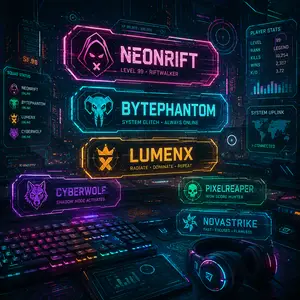 Handles
 Holidays
 Mixology
 Music
Music Office
 Parenting
 Party
Party Podcasting
 Productivity
 Professions
 Project Management
 Ships
Ships Sports
 Tattoo
 Tech Events
 TV
TV Twitch
 Wedding
 Witchy
 Wrestling