Discover all Code Name Generators
Skip list of name generators- Random Password Generator
- Commit Message Generator
- Code Name Generator
- Tech Stack Generator
- Hacker Name Generator
- Git-branchnaamgenerator
- Mobile Game Name Generator
- Server Hostname Generator
- Server Name Generator
- Wifi Names Generator
- Framework Name Generator
- Hackathon Project Name Generator
- Programming Language Name Generator
- Pull Request Title
- Ransomware Group Name Generator
- Software Name Generator
- Programmer Name Generator
- API Endpoint Name Generator
- Browser Extension Name Generator
- Cloud Project Name Generator
- Code Repository Name Generator
- Database Table Name Generator
- Dev Tool Name Generator
- Codeword Generator
- Computer Virus Name Generator
- DevOps Incident Prompt Generator
The Apps Behind Your Next Story

Build worlds. Tell stories.
For novelists, GMs, screenwriters & beyond
Build rich worlds, draft your stories and connect everything with advanced linking and easy references.

Practice your writing muscle
Creative writing practice can be exciting
Jump into 30+ writing exercises—playful, reflective, and style-focused. Build the habit that transforms okay writers into great ones.

Forge your own generators
Custom idea tables for any project
Build random generators from your own lists, combine results, publish pages, and keep your best idea engines close.

Build choice adventures
Branching stories on a visual canvas
Map scenes, connect choices, track resources, and publish interactive fiction people can actually play.

3000+ Idea Generators
Names, places, plots and more
Beat writer's block in seconds. Over 3000 free name and idea generators for characters, worlds, items and writing prompts.
All your ideas in one place
Roll from any Story Shack generator, pin favorites, and build your shortlist.
Search every Story Shack generator in one focused workspace, roll quick batches, pin favorites, and stack your best ideas.
Names for callsigns, classified projects, hacker handles and quiet operations behind the scenes
Code names are how stories, agencies, software teams and underground groups talk about something without saying its real name. If you are looking for a code name generator, project codename ideas, military callsign generator, hacker handle generator, spy alias names, secret operation names, software project names or classified mission tags, this page collects tools that turn that need into quick, usable inspiration. The generators here treat each label as a small story: who chose this name, what it is hiding, and what it suggests to anyone who hears it later.
What makes a code name actually work?
A good code name is short enough to remember, strange enough to stand out, and vague enough not to give the secret away. The generators in this category lean into that balance, drawing on military callsign traditions, NATO phonetic flavor, two-word operation patterns, animal or weather metaphors, mythic references, and the dry humor that engineering teams often use when picking internal project names. Names can suggest tone before anyone explains them. A label like Iron Heron sounds like a unit, while Quiet Lantern sounds like an operation, and Nightfox sounds like a person. That tonal hint is what lets a code name carry mood without spelling anything out.
What can you create here?
Use these generators for callsigns, military operation names, intelligence missions, hacker handles, online aliases, agent codenames, secret society identifiers, software project codenames, internal product names, startup working titles, prototype labels, fictional cyber tools, ARG clue tags, dark web persona names, resistance cell IDs, drone designations, satellite program names, cipher keys, vault numbers and quiet codewords for events that never officially happened. They suit spy thrillers, cyberpunk fiction, near-future games, military RPGs, heist stories, startup-themed satire, hacker novels, alternate-reality games and any tabletop campaign that wants its missions to feel like real briefings instead of generic adventures.
Writing and role-playing uses
Writers can lean on these generators when a chapter suddenly needs an operation, a unit tag, a project folder name, a chat handle or the codename a villain is referred to in classified files. Game masters can use them to tag entire arcs, give recurring agents memorable identifiers, label safehouses on a map, or generate the working title of a piece of stolen tech. The trick is to attach action to the label: who runs this operation, what does this hacker want, what does this project quietly build, and what happens when the wrong person learns the real name behind the code. A good codename hints at all of that without saying any of it.
How to refine a generated code name
Read several results aloud and notice which ones feel like they belong on a redacted document. If a name sounds too cute, pair it with a dry numerical suffix like Hummingbird-7 or Project Kettle-3. If a callsign feels too cinematic, demote it to a unit nickname and pick a flatter official name to sit beside it. Match the spelling style to the world: clean two-word operation names for thriller fiction, lowercase irony for hacker handles, alphanumeric tags for sci-fi facilities, and animal or weather words for military squads. Keep a short list and assign each survivor to a specific role so you stop generating and start writing.
Natural keyword coverage for creative search
Search phrases like code name generator, project codename ideas, military callsign generator, hacker handle generator, spy alias names, secret operation names, software project names, classified mission names and agent codename ideas all describe the same need: fast, atmospheric labels that feel deliberate rather than random. This page is built for that moment when a draft, a session or a brainstorm needs a name with a hint of secrecy. Use the results as raw material, swap fragments between them, drop the ones that feel obvious, and keep the option that makes you wonder what is actually hidden underneath. That curiosity is usually the sign that the code name has real story potential.
Frequently Asked Questions
Get answers to common questions about my code names and how to use them effectively for your creative projects.
How many code names do the generators create at once?
Each of my generators creates 10 unique names per generation by default. You can generate new batches as many times as you need. On average, I see users generate 16 ideas each time they use my generators, giving you plenty of options for your creative projects.
How do I save my favorite generated code names for later?
Simply click the save icon next to any name you like. Your saved names are stored in your browser's local storage and will be available the next time you visit. You can access all your saved names through the saved ideas panel, making it easy to build a collection of perfect names for your projects.
Can I copy generated code names to my clipboard?
Yes! You can easily copy any generated name by clicking on it or using the copy button. This makes it simple to paste names directly into your manuscripts, character sheets, or creative documents. All my generators are designed for seamless integration into your creative workflow.
Can I trust these generators for professional writing projects?
Yes, my generators are designed to create authentic-sounding names suitable for professional writing. I put care into crafting names that feel natural and memorable for different genres and cultures. While I can't claim specific published works use my generators, many writers and creators find them helpful for their creative projects.
Can I use generated code names for commercial projects like books or games?
Yes, you can use any names generated by my tools for commercial projects including novels, short stories, video games, tabletop RPGs, and other media. However, since these are randomly generated, I always recommend doing your due diligence to ensure the names aren't already trademarked or heavily associated with existing works in your industry.
Do I need to credit The Story Shack when using generated code names?
No credit is required when using generated names in your projects. While I always appreciate a mention or link back to The Story Shack, it's not mandatory. The names become yours to use freely once generated, whether for personal or commercial purposes.
How often are new code names added to the generators?
I regularly update my name databases with new entries and expanded collections. I continuously add new names based on user feedback, research, and emerging trends. Each generator contains thousands of unique combinations, ensuring fresh results every time you generate.
Are there premium features or additional generator options available?
All my name generators are completely free with no limits and no account required. For longer projects I also build dedicated apps that pair perfectly with the generators: Writer for distraction-free novel writing with full worldbuilding for characters, locations and lore, Pathways for branching story flowcharts, and Spark for daily creative writing exercises. Those apps need a free account; the random name generators stay open to everyone.
Explore all Various
Skip list of categories Academia
 Aesthetic
 AI Tools
 Beauty
 Beer
Beer Business
 Call of Duty
 Calligraphy
 Cars
Cars Code
Code Coffee
 Cosplay
 Cottagecore
 Cozy
Cozy Crafts
 Fashion
 Festivals
 Food
Food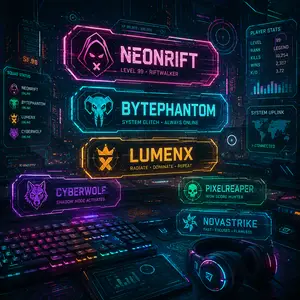 Handles
 Holidays
 Mixology
 Music
Music Office
 Parenting
 Party
Party Podcasting
 Productivity
 Professions
 Project Management
 Ships
Ships Sports
 Tattoo
 Tech Events
 TV
TV Twitch
 Wedding
 Witchy
 Wrestling
