
 Saved ideas
 Explore Story Shack
More generators, writing tools and storytelling resources.
Explore more from Writing Prompts
- Objects
- Topics
- Writing prompts
- Pictionary words
- Monologue ideas
- Fanfic AU prompts
- Dream prompts
- Adventures
- Cabin in the Woods Setup Name Generator
- Trans Joy Story
- Animated Movie Pitch Names
- Morning Pages
- Outfit aesthetic prompts
- Battle Scene Brief
- Betrayal Scene Prompts
- Campaign names
- Dialogue prompts
- Kids' Book Series
- Evil organizations
- Riddles
- Disease names
- Riddle prompts
- Worldbuilding Calendar Prompts
- Diplomatic Incident Prompts
- Treasure Map Clue Brief
- Cold War Setting
- Class Reunion Prompts
- Therapy Journal Prompts
- Citizen Science Project Briefs
- Legends
- Death Scene Prompts
- TikTok Hook Generator
- Disaster Movie Setup Name
- Air Show Stunt Ideas
- Cowboy Trail Song Ideas
- Civil War Faction Name Generator
- Childhood memory prompts
- Excuse To Skip Meeting
- Cartoon Show Pitch Concept Generator
Discover even more random name generators
Explore all Writing
Skip list of categories

What a crystal ball vision prompt is and where these briefs come from
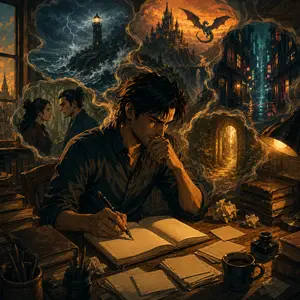
A crystal ball vision prompt is one short, vivid line of scrying staging. It carries the question (what the seer asks before touching the glass, the question the king has been forbidden to ask), the image (a black tower with a single lit window, a road of pale stones bending back on itself, a flock of birds shaped like a hand), and the misread (the comet the priest took for royal favor that turned out to be a plague ship, the wedding drums that were actually a funeral march rehearsed in the next valley). It is not a paragraph of foreshadowing. It is a single line of staging that opens up the rest of the scene the moment a writer starts drafting around it. The briefs in this generator are written specifically for the line level of scrying scenes, not for the chapter level, so each one leaves room for the rest of the page to fill itself in.
The collection is built from twenty topical lenses that slice crystal ball scenes by what is doing the work in any given moment. The seer's question covers the request that goes into the glass. The swirling image covers what condenses in the orb. The misread omen covers the moment the sign is read wrong. Arrival prophecy and departure prophecy frame the riders, ships, and faces that come and go. Royal court vision and common folk vision set the scale of the omen. Lineage omen, seasonal omen, war omen, love omen, death omen, wealth omen, and road omen each cover a category of fate. Hopeful misread and ominous misread each cover a category of wrong reading. Double-meaning omen covers the symbols that swing between two truths. Temple oracle, hedge witch, and first vision cover the hands that hold the orb. A brief lands in one of these lanes by design, so the writer can ask for another brief in the same lane to get a neighbor and start a scene, or jump to a different lane to change the angle mid draft.
How to use the briefs
Reading a brief
Treat each brief as staging plus a small inventory of who and what. The staging line tells you the orb's question or image (what the seer asks on the night of the black moon, a chest opening by itself with a mirror inside, a single white door in open countryside). The inventory tells you who holds the glass and what is in the room (the seer, the queen, a hedge witch with her cat, a novice at the temple's archive) and what the omen is about (a long road, a coming funeral, a season that will not end, a daughter not yet born). When a brief mentions a candle, a window, or a footstep, treat it as load bearing. The brief is not asking you to make the candle the point of the scene. It is telling you that the candle will matter to whoever is watching it, and that the rest of the scene should respect that.
Mixing briefs together
Briefs layer cleanly. A seer's question brief can sit over a swirling image brief to give the orb both its asking and its answer. A misread omen brief can sit over an arrival prophecy brief to set up the wrong sign arriving at the wrong house. A royal court vision brief and a lineage omen brief together can frame a coronation scene. A temple oracle brief and a hedge witch brief can layer two different seers reading the same night. Stack two or three briefs until you have a question, an image, a misread, and a witness, then commit to writing the scene. Mixing is also how you keep the page from collapsing into a single tone. A crystal ball generator that produces only queen-and-tower briefs will read as a single mood, while a stack of a novice's first vision, a village well turning silver, and a comet read as plague reads as a writer's tool.
Steering with re-rolls
If a brief is close but not quite right, re-roll. The twenty lenses are intentionally narrow. A few re-rolls in the same lens will usually produce the small change you need. If the lens itself is wrong, switch to a neighboring lens by combining a result from a different category. A hopeful misread brief and a love omen brief are often the same scene from different angles, and a double-meaning omen brief layered onto a swirling image brief can reframe the whole vision without changing a single word of staging. Re-roll until the orb shows what you need it to show.
Identity, tone, and ritual weight
Crystal ball vision prompts work as identity anchors. A chapter that opens with a seer's question brief reads as a scene about a particular reader and her stake. A chapter that opens with a swirling image brief reads as a scene about an atmosphere and a question. A chapter that opens with a misread omen brief reads as a scene about a community that has just guessed wrong. The briefs are written without allegiance to any single culture, deity, or time, so a brief can sit in a stone temple with a high priestess, a hedge witch's cottage with a brew of nine hedge things and one not, a queen's midnight chamber, or a novice's first night at the orb without changing a word. The staging does the cultural work; the brief is the seed.
For worldbuilding, the briefs double as quick setting tests. A royal court vision brief that says two banners over one throne, a child between them reading will sit as easily in a fantasy dynasty as in a post-imperial court, and a common folk vision brief that says a milkmaid crossing a yard at dawn, the pail empty, the milk invisible will sit as easily in a rural village as in a walled city-state. If a brief feels out of place, that is information about the world, not about the brief.
Tips for using the briefs
- Pick one brief to anchor the question, one to anchor the image, and one to anchor the misread. The rest of the scene can fill itself in around that triangle.
- Trust the staging over the names. A brief that says a hedge witch with a brew of nine hedge things and one not is a folk brief, even if the rest of the scene is institutional.
- Use the misread omen briefs as the engine of a chapter. A scene that begins with a hopeful misread and lands on an ominous misread is already a full arc.
- Reach for the object anchor omens (the chest with the mirror inside, the single coin with the unknown face, the silver bell in a counting house) when a vision needs a single physical thing to track through the chapter.
- Use the lineage, seasonal, and road omens as worldbuilding beats. They tell the reader what kind of world the omen is acting in.
- Reserve the double-meaning omen briefs for the moment a character has to choose between two readings of the same symbol. The choice is usually where the chapter pivots.
- Pair a temple oracle brief with a hedge witch brief to set up a story about institutional reading and folk reading of the same night.
- Use the first vision briefs sparingly. One per story is plenty, and a second novice will dilute the first.
Inspiration prompts to spark a scene
- Write a scene that opens with a seer's question brief and closes with a misread omen brief, the middle of the scene left for the writer.
- Write a chapter in which a swirling image brief and a double-meaning omen brief turn out to be the same vision seen by two different seers.
- Write a short scene using only a hedge witch brief and an ominous misread brief, the rest of the page working out who is in the cottage and why the brew is nine hedge things and one not.
- Write a chapter by stacking an arrival prophecy brief, a swirling image brief, a misread omen brief, and a first vision brief, in that order.
- Write a scene in which a hopeful misread brief and a death omen brief describe the same omen, the omen read two ways in the same village.
- Write a chapter in which a royal court vision brief sets up the throne and a hedge witch brief reads the throne, the witch's reading the one the throne believes.
- Write a scene in which a lineage omen brief and a wealth omen brief turn out to be the same inheritance, the inheritance passed and the inheritance taken.
- Write a quiet scene in which a temple oracle brief is the only vision, and the only consequence is the first vision brief of the novice standing in the doorway.
Frequently asked questions
How does the Crystal Ball Vision Prompt Generator work?
The generator returns a single crystal ball vision brief per click, drawn from a curated set of twenty topical lenses covering the seer's question, the swirling image, the misread omen, royal and common folk visions, lineage and seasonal omens, war, love, death, wealth, and road signs, plus misreads, double-meaning symbols, and the hands that hold the orb. Each brief is one short line of scrying staging you can drop into a draft.
Can I steer the Crystal Ball Vision Prompt Generator toward a specific name angle?
You cannot pin a single lens, but you can re-roll until a brief lands close to the angle you want, then layer two or three briefs together to lock the question, the image, and the misread. Layering is the customization method, and re-rolling within a single lens is how you find the small change you need.
Are the names original and safe to use?
Yes. Every brief is written for this generator, not lifted from an archive. The briefs are free to use in personal projects, classroom prompts, fan fiction, paid stories, and most commercial contexts, and you can edit, remix, or extend them freely without attribution.
How many names can I generate?
You can re-roll freely, with no daily cap, so the practical limit is however many briefs you actually need for the scene or chapter. Most writers settle on three to six briefs per project and treat the rest as discovery.
How do I save the names I like?
Each brief sits next to a click to copy button and a heart shaped save icon. Tap the heart to add the brief to a private collection on your device, or use copy to drop it straight into your notes or writing app.
What are good Crystal Ball Vision Prompt?
There's thousands of random Crystal Ball Vision Prompt in this generator. Here are some samples to start:
- What the scryer asks of the glass on the night of the black moon, the question she has waited a year to ask
- A single black tower swirling in the glass, its topmost window lit, the figure inside facing away from the queen
- The comet in the glass the priest read as royal favor, the comet's tail a black ship bearing plague to the harbor
- A rider seen in the glass three nights running, the rider's face changing each time but the horse always the same
- A beloved face in the glass turning away from the city at dawn, the road behind them already long
- A throne in the glass empty for a single night, the crown on the seat cold to the touch by morning
- A village well in the glass, the water turning silver at dusk, the silver drifting toward a single farmhouse
- A family tree in the glass, one branch bare, the branch the family has always called cursed
- A standard in the glass half-black and half-white, carried by a hand no one in the council can name
- A chair in the glass, the cushion still warm, the cup on the table still full, the doorway empty
About the creator
All idea generators and writing tools on The Story Shack are carefully crafted by storyteller and developer Martin Hooijmans. During the day I work on tech solutions. In my free hours I love diving into stories, be it reading, writing, gaming, roleplaying, you name it, I probably enjoy it. The Story Shack is my way of giving back to the global storytelling community. It's a huge creative outlet where I love bringing my ideas to life. Thanks for coming by, and if you enjoyed this tool, make sure you check out a few more!
Embed on your website
To embed this idea generator on your website, copy and paste the following code where you want the widget to appear:
<div id="story-shack-widget"></div>
<script src="https://widget.thestoryshack.com/embed.js"></script>
<script>
  new StoryShackWidget('#story-shack-widget', {
    generatorId: 'crystal-ball-prompt-generator',
    generatorName: 'Crystal Ball Vision Prompt Generator',
    generatorUrl: 'https://thestoryshack.com/tools/crystal-ball-prompt-generator/',
    language: 'en'
  });
</script>