Discover all Cli-Fi Name Generators
Skip list of name generatorsThe Apps Behind Your Next Story

Build worlds. Tell stories.
For novelists, GMs, screenwriters & beyond
Build rich worlds, draft your stories and connect everything with advanced linking and easy references.

Practice your writing muscle
Creative writing practice can be exciting
Jump into 30+ writing exercises—playful, reflective, and style-focused. Build the habit that transforms okay writers into great ones.

Forge your own generators
Custom idea tables for any project
Build random generators from your own lists, combine results, publish pages, and keep your best idea engines close.

Build choice adventures
Branching stories on a visual canvas
Map scenes, connect choices, track resources, and publish interactive fiction people can actually play.

3000+ Idea Generators
Names, places, plots and more
Beat writer's block in seconds. Over 3000 free name and idea generators for characters, worlds, items and writing prompts.

All your ideas in one place
Roll from any Story Shack generator, pin favorites, and build your shortlist.
Search every Story Shack generator in one focused workspace, roll quick batches, pin favorites, and stack your best ideas.
Names for a climate-changed world of floods, drought, heatwaves, climate refugees and last-chance science
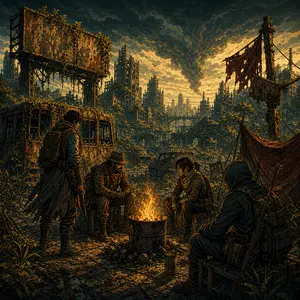
Cli-fi tells stories from a planet under stress: rising oceans, heat domes, failing crops, climate migration and the people fighting or adapting through it. If you are searching for cli-fi name generator, climate fiction character names, near-future novel names, eco-thriller character ideas, climate refugee names, post-collapse city names, climate activist names and dystopian climate names, this page is built to give you more than a random word list. It treats names as worldbuilding shorthand, so each result can become a character, settlement, agency, ship, storm, movement or rumor that feels native to a warming century rather than borrowed from generic sci-fi.
What makes these names fit a climate fiction world?
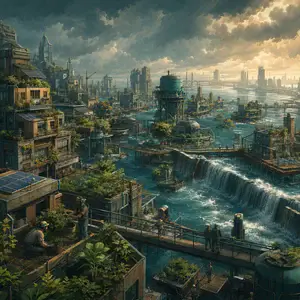
Names in cli-fi sit between the present and a near future shaped by weather, displacement, scarcity and policy. The generators in this category lean on details such as flooded coasts, abandoned suburbs, megafire seasons, glacier melt, dust-belt farms, seawalls, climate camps, evacuation lanes, water rationing, off-grid towns, carbon courts, geoengineering labs, storm-tracking crews, recovery teams, river guardians and quiet acts of repair. Those details matter because names carry context. A strong name hints at region, generation, profession, faith, language background, allegiance, danger or loss before the character speaks. It can also signal whether someone grew up inside a wealthy enclave, a public shelter, a relocation program, an old farming family, a research outpost or a coastal city that no longer exists on the new maps.
What can you create here?
Use these generators for climate refugees, relocation officers, water engineers, storm chasers, eco-saboteurs, off-grid farmers, NGO workers, militia leaders, scientists, journalists, marine biologists, drone pilots, salvage crews, lighthouse keepers, seed stewards and ordinary families learning to live with new weather. They are also useful for near-future novels, eco-thrillers, climate games, hopepunk stories, dystopian YA, indie short films, tabletop scenarios, podcast scripts and worldbuilding notes for any setting where the climate is a character. The most useful result is not always the loudest one. Sometimes a plain surname, a regional nickname or a town name with one lingering detail gives you more story than a dramatic title. Try several outputs, then ask which one immediately suggests a conflict, a home, a job, a fear or a secret.
Writing and role-playing uses
For writers, this category helps when a draft suddenly needs a believable side character, a relocated town, a new agency, a corporate adversary, a research vessel or a piece of weather worth naming. For game masters and scenario designers, it fills the gap between prepared notes and player curiosity. A generated name can become the engineer the group hires, the village the campaign decides to defend, the journalist who reports on them or the storm that rewrites a quiet trip into a survival arc. The names work best when you tie them to action: what is this person trying to save, what did this place flood away, and why does the name still appear in records?
How to refine a generated name
Read several results aloud. Drop the strongest into a line of dialogue, a news headline, a radio call sign, a character sheet or a chapter title. If a name sounds too clean and corporate, roughen it with a regional spelling, a parent culture, a place suffix or a shortened nickname. If it feels too dramatic, keep it as the official version on a document and give the character a simpler everyday name. Hold the tone steady: grounded, urgent, weather-aware, politically alert and quietly hopeful or bleak depending on your story, so the world stays inhabited by ordinary people as well as the activists, scientists and survivors who carry the plot.
Natural keyword coverage for creative search
Search phrases like cli-fi name generator, climate fiction character names, near-future novel names, eco-thriller character ideas, climate refugee names, post-collapse city names, climate activist names and dystopian climate names are useful because they show what writers actually need: quick inspiration that still feels like the world we are heading into. This page is built for that practical moment. Use the generated names as raw material, combine fragments, change spellings, remove anything that sounds too convenient, and keep the option that makes you wonder what the character lost, saved or refused to leave behind. That curiosity is usually a sign the name is already doing real narrative work.
Frequently Asked Questions
Get answers to common questions about my cli-fi names and how to use them effectively for your creative projects.
How many cli-fi names do the generators create at once?
Each of my generators creates 10 unique names per generation by default. You can generate new batches as many times as you need. On average, I see users generate 16 ideas each time they use my generators, giving you plenty of options for your creative projects.
How do I save my favorite generated cli-fi names for later?
Simply click the save icon next to any name you like. Your saved names are stored in your browser's local storage and will be available the next time you visit. You can access all your saved names through the saved ideas panel, making it easy to build a collection of perfect names for your projects.
Can I copy generated cli-fi names to my clipboard?
Yes! You can easily copy any generated name by clicking on it or using the copy button. This makes it simple to paste names directly into your manuscripts, character sheets, or creative documents. All my generators are designed for seamless integration into your creative workflow.
Can I trust these generators for professional writing projects?
Yes, my generators are designed to create authentic-sounding names suitable for professional writing. I put care into crafting names that feel natural and memorable for different genres and cultures. While I can't claim specific published works use my generators, many writers and creators find them helpful for their creative projects.
Can I use generated cli-fi names for commercial projects like books or games?
Yes, you can use any names generated by my tools for commercial projects including novels, short stories, video games, tabletop RPGs, and other media. However, since these are randomly generated, I always recommend doing your due diligence to ensure the names aren't already trademarked or heavily associated with existing works in your industry.
Do I need to credit The Story Shack when using generated cli-fi names?
No credit is required when using generated names in your projects. While I always appreciate a mention or link back to The Story Shack, it's not mandatory. The names become yours to use freely once generated, whether for personal or commercial purposes.
How often are new cli-fi names added to the generators?
I regularly update my name databases with new entries and expanded collections. I continuously add new names based on user feedback, research, and emerging trends. Each generator contains thousands of unique combinations, ensuring fresh results every time you generate.
Are there premium features or additional generator options available?
All my name generators are completely free with no limits and no account required. For longer projects I also build dedicated apps that pair perfectly with the generators: Writer for distraction-free novel writing with full worldbuilding for characters, locations and lore, Pathways for branching story flowcharts, and Spark for daily creative writing exercises. Those apps need a free account; the random name generators stay open to everyone.