More generators, writing tools and storytelling resources.
Why diplomatic incidents make strong story engines
A diplomatic incident is a public disagreement between states, rulers, institutions, or their representatives. It may begin with something small: a flag displayed incorrectly, an envoy seated below their rank, a phrase translated badly, or a gift that carries an insulting association. The visible offense matters, but the deeper conflict usually involves status, territory, memory, trade, security, or domestic politics. That combination gives writers a useful tension. Everyone must speak in formal language while deciding how much humiliation, risk, and ambiguity they can tolerate.
Choosing and adapting a generated incident
Match the name to the scale
Some results imply an awkward reception that can still be repaired. Others suggest detention, espionage, military movement, treaty fraud, or a final ultimatum. Choose a name that fits the amount of danger you want. A banquet error may embarrass a minister, while a seized diplomatic pouch could expose secrets and trigger expulsions. The same title can also change scale over time. What begins as a protocol complaint may become the accepted name for a broader crisis.
Decide what each side believes
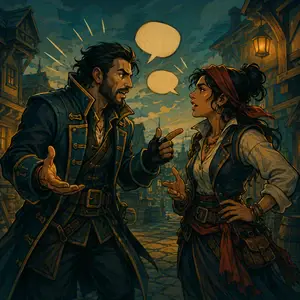
Diplomatic tension becomes more convincing when the parties disagree about intent. One government may call the event an accident, while another sees a calculated test. A translator may have made an honest mistake, followed an order, or chosen a word that protects one leader at the expense of another. Give every side a version it can defend in public. Then create a private version shaped by fear, pride, intelligence reports, or political survival.
Build the escalation path
Connect the incident to concrete responses. These can include a formal note, a summoned ambassador, a canceled visit, a trade restriction, an expelled official, military exercises, or an apology with carefully limited wording. Each action should narrow or widen the available choices. The strongest crisis plots do not jump instantly from insult to war. They show officials making decisions that seem reasonable in isolation but become dangerous when combined.
Identity, ceremony, and political meaning
Protocol is not merely decoration. Seating order, titles, flags, gifts, clothing, routes, and speaking time communicate recognition and rank. In a fictional setting, define which symbols carry historical weight and who is allowed to use them. A disputed throne, former colony, divided city, sacred site, or unrecognized government can turn ordinary ceremony into a test of sovereignty. Cultural and religious customs also require care. Treat them as meaningful practices understood differently by participants, not as exotic obstacles added only for spectacle.
Leaders may want compromise while needing to appear firm at home. Journalists, opposition parties, officers, merchants, and allies push in different directions. An apology that satisfies foreign diplomats may look weak to domestic supporters, while a threat meant for voters may frighten allies.
Practical tips for using the generator
- Choose one dominant cause, such as protocol, mistranslation, detention, trade, espionage, or ceremonial symbolism.
- Name the offended party and identify what recognition, apology, reversal, or compensation they demand.
- Separate the public explanation from the private motive so characters can negotiate around incomplete truths.
- Give the incident a visible object or moment that witnesses can remember, photograph, quote, or dispute.
- Plan at least three possible responses, including one restrained option, one retaliatory option, and one irreversible step.
- Let the incident change later relationships instead of resolving it without cost after a single meeting.
Questions that turn a title into a plot
Use the generated name as the first line of an inquiry. The answers below can define the crisis, the factions around it, and the decision that makes it memorable.
- Who benefits if the incident is treated as deliberate rather than accidental?
- Which witness, recording, document, or translation could overturn the official account?
- What apology could end the dispute, and why is one leader unable to offer it?
- Which ally quietly prefers escalation because the crisis serves another goal?
- What ordinary person is trapped between diplomatic immunity, state secrecy, and public anger?
- Which final gesture would restore trust, and what would it cost the person who makes it?
How does the Diplomatic Incident Generator work?
Each click selects a concise incident name from topic-specific groups covering protocol, envoys, mistranslation, ceremonies, sanctions, espionage, treaty disputes, and escalation. Rerolling presents another angle that can become a plot title or worldbuilding seed.
Can I steer the Diplomatic Incident Generator toward a specific name angle?
Reroll until a result approaches the kind of crisis you need, then combine useful elements from several names. You might keep the ceremonial object from one result and the political response suggested by another.
Are the names original and safe to use?
The entries were written for this generator and may be adapted for personal projects and most commercial creative work. Check names against your own setting, trademarks, and real events when publication requires additional clearance.
How many names can I generate?
You can reroll whenever you need another option. Use repeated results as a brainstorming sequence, compare several tones, and save only the incident names that suggest a clear conflict for your story or campaign.
How do I save the names I like?
Use the copy control to place a result on your clipboard, or select the heart icon to save it. You can then collect promising incident names before choosing which one to develop.
What are good Diplomatic Incident Prompts?
There's thousands of random Diplomatic Incident Prompts in this generator. Here are some samples to start:
- The Heir's Unanswered Salute
- A Nameplate Written in Red
- The Interpreter's Unofficial Footnote
- The Minister Who Refused the Sample Goods
- A Toast Made to the Wrong President
- The Last Flight Out of the Capital
- The Spokesperson Who Repeated the Rumor
- The Medal Ceremony Without the Guest Anthem
- The Choice Between Embassy and Army
- The Delegation List with a Dead Official
About the creator
All idea generators and writing tools on The Story Shack are carefully crafted by storyteller and developer Martin Hooijmans. During the day I work on tech solutions. In my free hours I love diving into stories, be it reading, writing, gaming, roleplaying, you name it, I probably enjoy it. The Story Shack is my way of giving back to the global storytelling community. It's a huge creative outlet where I love bringing my ideas to life. Thanks for coming by, and if you enjoyed this tool, make sure you check out a few more!

 Saved ideas