
 Saved ideas
 Explore Story Shack
More generators, writing tools and storytelling resources.
Explore more from Writing Prompts
- Topics
- Pictionary words
- Writing prompts
- Objects
- Fanfic AU prompts
- Monologue ideas
- Dream prompts
- Aro Ace Friendship Arc Names
- Body Horror Mutation Stories
- Bachelor Mansion Contestant
- Civil War Faction Name Generator
- Riddles
- Analog Horror Broadcast Ideas
- Royal court scene prompts
- Fantasy Quest Hook Names
- Class Reunion Prompts
- Death Scene Prompts
- Battle Scene Brief
- Betrayal Scene Prompts
- Adoption Story Generator
- TikTok Hook Generator
- Conspiracy Theory Hook Generator
- Moral dilemma prompts
- Auto Reply Snark Briefs
- Angst prompts
- Hireling Prompts
- Funeral Scene Prompt Brief Generator
- Dialogue prompts
- Morning Pages
- Disaster Movie Setup Name
- Animated Movie Pitch Names
- Diary entry prompts
- Ancestor Altar Themes
- Drug names
- Imaginary Friend
- Antihero ideas
- Auction Lot Description Briefs
- Battle Cry Generator
- Phobia prompts
Discover even more random name generators
Explore all Writing
Skip list of categories
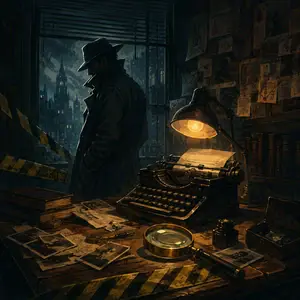


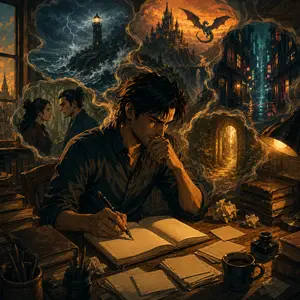
What the Cold War Setting Prompt Generator does
This generator returns cold war scene briefs, single-sentence prompts that open a setting the way a novelist or a tabletop game master would lay it on the page. Each prompt is anchored by a quiet, concrete detail, a reading lamp, a torn concert ticket, a bus route that no one else takes at that hour, so that the rest of the scene can be drafted directly from the implied space. The brief is the seed; the rest of the story is yours.
The prompts deliberately avoid faction labels, named operations, and real persons. They focus on the textures that make a cold war setting feel right: the lamps that hum at a frequency only one attache can hear, the back stairwells of cultural centers, the cafes where the watch officers and the dissidents drink from the same counter, the morning bus that arrives at 07:03 with a single briefcase in the luggage hold. These are the props of the era, distilled to one short sentence per scene.
Origins and lore of the bug-under-the-lamp motif
The "bug under the lamp" is a piece of tradecraft folklore that long predates any single agency. The idea is simple: a small listening device, often no larger than a thumbnail, hidden in or beneath a desk lamp, a bedside lamp, a standing lamp in a hotel lobby, or a wall fixture in a corridor. The lamp gives the device a power source and a reason to be in the room, and the angle of the shade gives a natural line to the room's most occupied seat. A writing prompt anchored by the bug under the lamp is not a description of a gadget. It is a way of saying: this room is being listened to, and the listener is comfortable enough to leave the lamp on.
Many of the prompts in this generator borrow the same logic without naming it. A reading lamp with a base that is two centimeters too thick, a brass hotel lamp whose base unscrews clockwise while every other lamp in the building unscrews the other way, a corner cafe lamp retrofitted with a transmitter no patron has ever noticed: each of these details is the bug under the lamp, wearing a different coat.
Picking a prompt and using it well
Read the sentence as a setting, not as a task
Every prompt in this generator is a setting with a pressure already loaded into it. There is no instruction at the end of the line. The reader's job is to notice what is missing: who lives in this building, who watches it, who visits at the unusual hour, what the courier is carrying, and why the watch post in the courtyard is closed for the morning. The pressure is the verb, and the verb is rarely written out.
Use one prompt as a chapter, two as a sequence
Many writers find that the most useful workflow is to re-roll until they have two or three prompts that share a location, a season, or a single recurring face, then read them in sequence. A capital city prompt, a cipher drop prompt, and a daily traffic pattern prompt can quietly describe the same embassy district across three points in one day. The generator's lens mix is designed to make this kind of layering easy: the prompts are written to fit together even when they were not written as a set.
Pair the prompt with a character you already have
The prompts are intentionally character-free. Drop one of your own characters, a junior translator, a station chief, a defector's wife, a courier with a single coded route, into the implied space, and the scene often drafts itself. The setting supplies the verbs, the supplies, and the time of day; the character supplies the stakes.
Identity, secrecy, and cultural weight
Cold war settings are not interchangeable. A 1961 cafe in Budapest, a 1968 square in Prague, a 1972 balcony in Beirut, and a 1979 ministry corridor in Sofia each carry a different weight of listening, surveillance, and public silence. This generator is careful not to flatten that weight. Where a season or a city is named, it is named because the named setting does most of the work; where it is not, the prompt is written so that the specific city can be swapped in without breaking the scene.
Some prompts lean on the small and domestic: a cobbler who fits the same pair of diplomatic shoe lasts every Thursday and never asks for a name, a hotel front desk that keeps the same guest book since 1922, a barbershop pole that has not been restriped since 1962. These are the surfaces of a cold war setting. They are also where the story lives, because the watchers cannot watch everything, and the small shops are the only place the city still trusts itself.
Tips for getting the most out of the prompts
- Re-roll freely. The generator is designed to be re-rolled until a prompt matches the mood of your project. There is no penalty for skipping a long streak of results that do not feel right.
- Trust the small details. A prompt that names a single reading lamp, a single bench, a single brick, is giving you the camera angle. Set the scene there.
- Layer by lens. Prompts from the "cipher drop" lens, the "double-agent suspicion" lens, and the "daily traffic pattern" lens often read as different parts of the same operation. Treat them as a cast list for a single afternoon.
- Keep one prop. A folded newspaper, a single brass key, a hotel guest book: when the same prop shows up across multiple prompts, you have a thread. Use it.
- Resist the urge to explain the lamp. The bug under the lamp works because it is not pointed at. A prompt that names the lamp is already doing the work; the explanation is the bug, the listening post, the file clerk, the case officer. They are your characters, not the lamp's.
Inspiration prompts to try first
- The tobacconist served the same clients before the war; now his shop sits between two listening posts.
- A folded newspaper left on the third bench from the lion statue, the crossword half-finished.
- A persistent 50-hertz hum drifts off the broadcast tower, and only the new attache can hear it.
- December fog off the river turns the embassy gates into a row of dim lanterns.
- Behind the false panel of the tailor's fitting room, a single drawer of cipher pads survives.
How does the Cold War Setting Prompt Generator work?
The generator surfaces scene briefs curated for cold war settings, randomized per click. Each prompt is anchored by a small concrete detail, often a lamp, a briefcase, a bridge, or a single bench, so you can draft a full scene directly from the implied setting.
Can I steer the Cold War Setting Prompt Generator toward a specific prompt angle?
You can re-roll freely until a result fits the angle you want, and the prompts are written to layer together. Pulling two or three prompts from different lenses often reads as a single scene across one day, so combining is usually the best steering tool.
Are the prompts original and safe to use?
Every prompt was written for this generator and is free to use in personal and most commercial writing projects. The prompts avoid real persons, named operations, and faction labels, so they can be adapted to your own setting without legal friction.
How many prompts can I generate?
You can re-roll the generator as many times as you like, and each click returns a fresh prompt drawn from a curated pool. The pool is broad enough that you can find an angle for almost any cold war story you want to draft.
How do I save the prompts I like?
Each prompt has a click-to-copy button so you can paste it into your draft, your worldbuilding notes, or your session prep. The heart or save icon lets you keep a running list of favorites for the project you are building.
What are good Cold War Setting?
There's thousands of random Cold War Setting in this generator. Here are some samples to start:
- West Berlin, where every sixth lamp shade hides a listening device.
- A chalk mark on a fence post near the bookshop signals that the next cipher is ready.
- The station chief suspects the new translator
- his sources dry up the week she arrives.
- A discreet disk lodged under the desk lamp records every late-night dictation.
- The curved concrete of the trade mission's lobby, every surface angled to swallow sound.
- Journalists from four embassies share the same peeling elevator of the press hotel.
- The funicular's mirrored cabin flashes across the embassy district every ten minutes.
- The first shift leaves the radio factory at 06:50, and the watchers in the van mark every face.
- December fog off the river turns the embassy gates into a row of dim lanterns.
- The tobacconist served the same clients before the war
- now his shop sits between two listening posts.
About the creator
All idea generators and writing tools on The Story Shack are carefully crafted by storyteller and developer Martin Hooijmans. During the day I work on tech solutions. In my free hours I love diving into stories, be it reading, writing, gaming, roleplaying, you name it, I probably enjoy it. The Story Shack is my way of giving back to the global storytelling community. It's a huge creative outlet where I love bringing my ideas to life. Thanks for coming by, and if you enjoyed this tool, make sure you check out a few more!
Embed on your website
To embed this idea generator on your website, copy and paste the following code where you want the widget to appear:
<div id="story-shack-widget"></div>
<script src="https://widget.thestoryshack.com/embed.js"></script>
<script>
  new StoryShackWidget('#story-shack-widget', {
    generatorId: 'cold-war-setting-prompt-generator',
    generatorName: 'Cold War Setting Prompt Generator',
    generatorUrl: 'https://thestoryshack.com/tools/cold-war-setting-prompt-generator/',
    language: 'en'
  });
</script>