
 Saved ideas
 Explore Story Shack
More generators, writing tools and storytelling resources.
Explore more from Writing Prompts
- Objects
- Pictionary words
- Writing prompts
- Topics
- Monologue ideas
- Dream prompts
- Fanfic AU prompts
- Cartoon Show Pitch Concept Generator
- Magic system prompts
- Camp Counselor Story
- Big Brother Houseguest Briefs
- Imaginary Friend
- Battle Scene Brief
- Cover Identity
- Air Show Stunt Ideas
- Legends
- Battle names
- Conspiracy Theory Hook Generator
- Fantasy Quest Hook Names
- Bounty Board Quest Generator
- Riddles
- Birthday Party Brief
- Aromantic Story
- Getaway Driver Generator
- Blessing Generator
- Battle Cry Generator
- Heraldry
- Gothic Family Secret Prompt Generator
- Family Motto
- Auto Reply Snark Briefs
- Eulogy Openers
- Evil organizations
- Bedtime Story Hooks
- Childhood memory prompts
- Class Reunion Prompts
- Abandoned Lab Prompts
- Tombstone Epitaph Brief Generator
- TikTok Hook Generator
- Found Treasure Prompt Generator
Discover even more random name generators
Explore all Writing
Skip list of categories


Origins, Oracles, and Why Prophecy Works
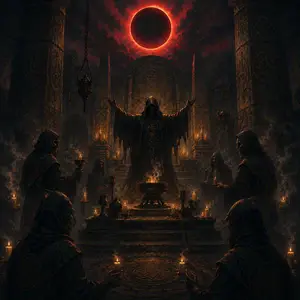
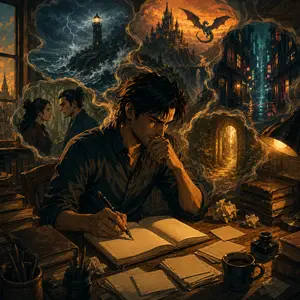
Prophecy in literature rarely works because it predicts the future with clean accuracy. It works because the speaker sounds authoritative while the audience understands only part of the message. Greek myth gives the classic model through Delphi, where kings heard true answers wrapped in fatal ambiguity. Biblical prophetic books pair warning with covenant and social critique. Norse seeresses speak in image-heavy fragments that feel older than the listener. Medieval chronicles turn celestial events, births, famines, and unusual animals into political proof. Fantasy inherits all of that. A good prophecy prompt therefore needs three layers: striking imagery, a public interpretation, and the later reveal that the public reading was incomplete. This generator focuses on that third layer. It does not just hand you an omen. It hands you the mistaken certainty around the omen, which is usually where plot, irony, and tragedy begin.
Picking and Using a Prophecy Prompt
Start with the surface image
Read the first image as if you were a frightened witness inside the world. Is the sign visual, like ash, eclipses, lilies, or cracked crowns? Is it auditory, like bells, lullabies, and repeated names? Is it social, like a coronation, trial, feast, or funeral? The surface tells you which institutions will seize the prophecy first. Temples want liturgy, courts want legitimacy, armies want permission, and villages want an explanation that keeps daily life recognizable. That reaction is useful. The wrong reading should feel persuasive, not foolish.
Decide who benefits from the mistake
Most memorable prophecies are not misunderstood by accident alone. Somebody benefits from choosing one interpretation over another. A regent may present a verse as proof that a nephew must be exiled. Priests may frame a plague omen as a call for obedience rather than reform. A family may decide a birthmark means inheritance because the alternative threatens their lineage. When you use a prompt, identify the person or institution that turns ambiguity into policy. That move gives the prophecy weight in your story. It changes laws, marriages, travel plans, border decisions, and who is allowed to speak.
Build the delayed fulfillment
The best fulfillment does not simply announce that everybody was wrong. It reveals that they were wrong in a specific, story-shaping way. If a kingdom thinks a comet names a conqueror, the truth might be that it marks the road refugees will take. If a palace fears a prophecy about broken shields, the real fracture may be legal, marital, or spiritual rather than military. Use the prompt to create a delay between omen and meaning. Let characters act on the wrong explanation long enough for that explanation to become expensive. Then, when the real meaning lands, it should rearrange what earlier scenes meant instead of replacing them.
Identity, Authority, and Cultural Weight
Prophecies matter because communities treat them as more than private poetry. They justify dynasties, pilgrimages, purges, reforms, crusades, succession disputes, and impossible hopes. In fantasy and speculative fiction, prophecy also helps a writer show what a culture fears losing. Some societies read signs through weather and livestock. Others trust stars, dreams, relics, bureaucratic records, or machines. The chosen symbols tell you where authority lives. That is why prophecy prompts are strong worldbuilding tools. A single line about a saint's bone rattling during legal judgments or a city clock striking thirteen can tell readers how law, ritual, and memory overlap in that setting.
Tips for Writers
- Give the prophecy an audience before you give it a solution. Reactions create stakes faster than explanation.
- Make the mistaken interpretation emotionally plausible. People cling to readings that protect power, grief, or identity.
- Let symbols repeat in altered contexts. A crown in the sky, a crown on a portrait, and a crown in a drain feel connected without feeling mechanical.
- Treat fulfillment as consequence, not twist alone. The point is what the wrong belief made people do.
- Match the omen to the culture that records it. Fisher kingdoms read tides differently than monasteries, courts, or factory cities.
Inspiration Prompts
If you want to expand a generated result into a scene, chapter, or whole plotline, ask questions that connect image, institution, and error. Strong prophecy fiction is never only about seeing the future. It is about who gets to interpret the future first, and what everybody else pays for believing them.
- Who first declares the public meaning of the omen, and what do they stand to gain?
- What ordinary person notices the sign's true pattern long before the powerful do?
- Which law, wedding, invasion, or funeral happens because the prophecy is misread?
- What symbol returns later in humbler form and proves the first reading false?
- When the truth comes out, who refuses to abandon the comforting lie?
Frequently Asked Questions
Explore the most common questions about the Prophecy Prompt Generator and how to turn one ominous line into a larger story engine.
How does the Prophecy Prompt Generator work?
It combines omens, public misreadings, and delayed meaning so each result feels like the seed of a prophecy that can reshape a setting, family, court, cult, or war.
What kind of prophecy prompts will I get?
You will see prompts about celestial signs, village folklore, relics, plague omens, dynastic succession, civic portents, battlefield warnings, and other prophecy traditions useful for fantasy or speculative fiction.
How can I make a prophecy feel misinterpreted?
Give the first interpretation to someone with power, fear, or an agenda, then let later scenes reveal a humbler symbol, witness, or consequence that changes the meaning without breaking the original image.
How many prophecy prompts can I generate?
You can keep generating as long as you like, which makes the tool useful for outlining novels, designing campaigns, drafting scenes, or finding one charged omen for a single chapter.
How do I save my favorite prophecy prompts?
Click a result to copy it, then keep the strongest ones in your notes or use the heart icon to compare which omen, institution, and false interpretation best fits your project.
What are good prophecy prompts?
There's thousands of random prophecy prompts in this generator. Here are some samples to start:
- An eclipse crowns the miller's son, while the real usurper lights every temple lamp.
- Seven comets promise peace, yet each tail marks a village the queen will burn.
- Moonlight spells one infant's name on snow, and the court chooses the wrong cradle.
- A falling star blesses the harbor, but the true miracle is the ship that never docks.
- Dawn arrives blood red for one week, convincing priests the war has already been won.
- The sun halo names a savior, though everyone mistakes the masked executioner for one.
- Constellations vanish above the capital, and astrologers blame a prince instead of the bridge-builder.
- Lightning writes a marriage prophecy, but the foretold union binds two enemy armies.
- A second moon appears in dreams, causing an empire to worship the wrong twin.
- When the sky rains feathers, the city hunts angels and misses the plague-bearer.
About the creator
All idea generators and writing tools on The Story Shack are carefully crafted by storyteller and developer Martin Hooijmans. During the day I work on tech solutions. In my free hours I love diving into stories, be it reading, writing, gaming, roleplaying, you name it, I probably enjoy it. The Story Shack is my way of giving back to the global storytelling community. It's a huge creative outlet where I love bringing my ideas to life. Thanks for coming by, and if you enjoyed this tool, make sure you check out a few more!
Embed on your website
To embed this idea generator on your website, copy and paste the following code where you want the widget to appear:
<div id="story-shack-widget"></div>
<script src="https://widget.thestoryshack.com/embed.js"></script>
<script>
  new StoryShackWidget('#story-shack-widget', {
    generatorId: 'prophecy-prompt-generator',
    generatorName: 'Prophecy Prompt Generator',
    generatorUrl: 'https://thestoryshack.com/tools/prophecy-prompt-generator/',
    language: 'en'
  });
</script>