More generators, writing tools and storytelling resources.
Cocktail garnish pairing basics
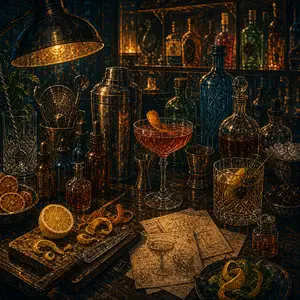
Garnish pairing sits between recipe design and visual storytelling. A garnish can add aroma, echo a flavor already in the drink, create a color contrast, or give the guest a small texture cue before tasting. Classic cocktails often use direct signals such as a lemon twist with gin, an orange peel with whiskey, or an olive in a dry martini. Modern bars stretch that language with herbs, dehydrated fruit, pickles, edible flowers, smoked clips, and rims built from salt, sugar, spice, or crushed botanicals.
How to use the names
Start with the drink's anchor
Look first at the ingredient that defines the cocktail. A rum drink may welcome pineapple, coconut, nutmeg, or charred fruit. A stirred whiskey drink may ask for orange oil, cherry, coffee, walnut, maple, or smoke. A sour can use citrus, fruit, sugar, or a texture that works with foam. The generated name is a compact label, not a binding recipe, so adjust size, shape, and preparation for the actual glass.
Balance appearance and service
A garnish should look deliberate from the guest's angle and still be practical for the bartender. Tall highballs suit ribbons, wheels, and spears. Coupes and Nick and Nora glasses reward smaller details such as a peel coin, flower, or rested skewer. Party drinks can carry dramatic height, while busy service often needs a clean twist, pick, or rim that can be repeated without slowing the line.
Let texture finish the idea
Texture is often the detail that makes a pairing memorable. Crisp chips, coarse salt, candied ginger, soft foam, herb leaves, and fruit pearls all change how the drink feels before it is tasted. Use texture to underline the cocktail's body. A creamy dessert drink can take chocolate or brittle. A sparkling drink may need a bright peel or cucumber ribbon. A savory drink can use brine, celery, pickle, or salt.
Style, identity, and context
Garnish choices carry cultural and practical meaning. A tiki-style garnish invites abundance, crushed ice, mint, pineapple, and playful height. A minimalist martini garnish says precision and restraint. A zero-proof cocktail benefits from the same care as a spirit drink, because the garnish can supply aroma and occasion. Treat ingredients with respect, avoid novelty for its own sake, and make sure the garnish belongs to the drink rather than just decorating it.
Practical tips
- Match one garnish element to the dominant aroma of the drink.
- Use color contrast when the cocktail itself is pale, clear, or visually quiet.
- Choose edible or clearly removable pieces, especially for savory or spiced accents.
- Scale the garnish to the glass so it frames the drink instead of blocking it.
- Test rims and salts with a small sip before committing them to a menu.
- Write down prep steps for any garnish that needs smoke, charring, drying, or pickling.
Questions for pairing inspiration
When a result feels close but not finished, use it as a prompt for the drink's sensory role. The best pairing often comes from one decisive choice rather than a crowded arrangement.
- What aroma should reach the guest before the glass touches the lips?
- Which color would make the drink read clearly across a bar?
- Does the garnish echo the base spirit, or does it create contrast?
- Can the same idea be made faster for a busy shift?
- Would a texture cue make the first sip feel brighter, richer, or cleaner?
- Is this garnish still useful if the drink becomes zero-proof?
How does the Cocktail Garnish Pairing Generator work?
It returns short garnish pairing names shaped around cocktail use, with angles such as citrus, color, texture, herbs, spice, and glassware mood. Each click gives a fresh result you can copy, adapt, or compare.
Can I steer the Cocktail Garnish Pairing Generator toward a specific name angle?
Yes. Re-roll until a result leans toward the drink style you need, then combine the garnish, color note, or texture idea with another result. A bartender can also simplify a showy pairing for service speed.
Are the names original and safe to use?
The names are written for this generator and are meant as drafting material for menus, recipes, stories, and personal projects. For public branding, check trademarks and local menu rules before treating any phrase as exclusive.
How many names can I generate?
You can keep generating results as you refine the drink. Use several rolls to compare citrus, herb, tropical, savory, and sparkling directions while staying focused on the serve itself.
How do I save the names I like?
Use click-to-copy for a quick paste, or tap the heart/save icon to keep a pairing while you continue exploring. Saving a few contrasting options makes later menu editing easier.
What are good Cocktail Garnish Pairings?
There's thousands of random Cocktail Garnish Pairings in this generator. Here are some samples to start:
- Lemon Twist With Thin Sugar Rim
- Pear Slice With Elderflower Spray
- Purple Basil Leaf On Grapefruit Spritz
- Sage Leaf With Brown Butter Cherry
- Green Chile Mint Slap
- Burnt Sugar Orange Chip
- Pear Fan With Ginger Dust
- Lemon Verbena With Elderflower Spritz
- Straight Celery Stick
- Yuzu Peel With Mineral Tonic
About the creator
All idea generators and writing tools on The Story Shack are carefully crafted by storyteller and developer Martin Hooijmans. During the day I work on tech solutions. In my free hours I love diving into stories, be it reading, writing, gaming, roleplaying, you name it, I probably enjoy it. The Story Shack is my way of giving back to the global storytelling community. It's a huge creative outlet where I love bringing my ideas to life. Thanks for coming by, and if you enjoyed this tool, make sure you check out a few more!

 Saved ideas
  Academia
 Aesthetic
 AI Tools
 Beauty
 Beer
Beer Business
 Call of Duty
 Calligraphy
 Cars
Cars Code
Code Coffee
 Cosplay
 Cottagecore
 Cozy
Cozy Crafts
 Fashion
 Festivals
 Food
Food Handles
 Holidays
 Mixology
 Music
Music Office
 Parenting
 Party
Party Podcasting
 Productivity
 Professions
 Project Management
 Ships
Ships Sports
 Tattoo
 Tech Events
 TV
TV Twitch
 Wedding
 Witchy
 Wrestling