More generators, writing tools and storytelling resources.
Origins of the staff techniques
The Ruyi Jingu Bang is older than most empires. Once a pillar that measured the Eastern Sea for Yu the Great, it shrank into the hand of the Stone Monkey and learned to grow again with a thought. Black Myth: Wukong inherits centuries of Journey to the West folklore, then layers it with Ming-era wushu vocabulary - pillar stances, thrusting forms, monkey kung fu, and the spiral of celestial qi. Each named technique in the game (or invented for fan work) is part choreography, part incantation: a posture you settle into, a verb that explodes from it, and an animal or element that gives the strike its flavour. Naming a move well is half the magic.
Picking and using a technique name
Choose a stance verb
Smash names lean downward and percussive - Crush, Topple, Hammer, Sunder. Pillar names hold and punish - Anchor, Vigil, Stand, Bulwark. Thrust names dart and pierce - Lance, Spear, Pin, Skewer. Picking the verb first locks the technique into one of the three sacred postures, which keeps your fan-made movesets readable to anyone who has played a single boss fight.
Layer in beast and element
Add a creature from the bestiary - Tiger, Crane, Wolf, Carp, Serpent, Crow - or an element like Cinder, Storm, Frost, Jade, Sandstone. The result reads like a temple-wall mural: "Crane Pillar Vigil", "Cinder Smash Avalanche", "Serpent Thrust Whisper". Each pairing implies a silhouette and a sound, which is exactly how the game's own technique cards earn their atmosphere.
Decide the register
Solemn techniques (Boundless, Sacred, Eternal) suit final-form transformations and divine pacts. Earthy techniques (Mud, Bramble, Rust) suit yaoguai brawls and roadside ambushes. Mix the two only when the move is meant to feel transgressive - a monkey punching a god is exactly that.
Identity and cultural weight
Staff arts in Chinese tradition are tied to monastic discipline, especially Shaolin gun shu, where the staff is called "the grandfather of weapons". Black Myth borrows that lineage and bends it through Daoist transformation magic - the same staff that drills holes in mountains can shrink behind an ear or split into a thousand copies. Technique names should honour both halves: the monk's drilled discipline and the trickster god's refusal to stay in one shape. A name like "Pillar of the Patient Mountain" lands harder than a generic "Strong Strike" because it knows the lineage it is invoking and the joke it is playing on it.
Tips for writers and modders
- Keep technique names to two or three beats - "Wind Reversal", "Mountain Crush Arc". Long names lose the impact of a martial shout.
- Anchor each name in one of the three stances so players can intuit the animation before reading the tooltip.
- Use animal totems sparingly - pick four or five for a moveset and let them recur as a motif.
- Reserve celestial words (Heaven, Jade Emperor, Boundless) for transformations or signature finishers.
- For demon-king bosses, lean into corruption: rust, ash, ichor, smog, locust.
- Read the name out loud - if it does not sound like a shout in a dusty monastery, soften or sharpen the syllables until it does.
Inspiration prompts
Use these questions to push a technique name from generic to mythic before you commit it to a card or tooltip:
- Which stance does the Destined One settle into before the strike?
- What animal or element does the staff briefly become?
- Is this a move learned from a master, stolen from a demon, or remembered from a past life?
- Does the name reveal the move, or hide it the way a sutra hides its meaning?
- What sound does the name make when shouted across a temple courtyard?
- If a yaoguai survives the strike, what story would they tell about the name afterwards?
Frequently Asked Questions
Explore the most common questions about the Staff Technique Name Generator and how it can shape your Black Myth: Wukong-inspired movesets, fanfic, and tabletop martial arts.
How does the Staff Technique Name Generator work?
It draws from a curated pool of stance verbs, beast totems, and elemental words rooted in Black Myth: Wukong and classical wushu. Each click stitches them into a fresh, ready-to-use technique name.
Can I specify the type of staff technique I want?
The generator focuses on Wukong-flavoured staff arts, but rerolling lets you steer toward Smash, Pillar, or Thrust energy by saving names that match the stance you want and discarding the rest.
Are the staff technique names unique?
Yes. The pool blends mythic vocabulary with martial verbs in thousands of combinations, so most names you see will be original to your session and safe to use in fan projects, mods, or homebrew.
How many staff technique names can I generate?
There is no cap. Generate as many batches as you need to fill out a full moveset, a boss skill tree, or a tabletop campaign of monkey-king martial duels.
How do I save my favorite staff technique names?
Click any name to copy it, or tap the heart icon next to a result to pin it to your saved list for the session - handy when you are drafting an entire moveset and want to compare options.
What are good Staff technique names (Black Myth: Wukong)?
There's thousands of random Staff technique names (Black Myth: Wukong) in this generator. Here are some samples to start:
- Wind Reversal
- Boundless Dance
- Boundless Tail Pattern
- Dust Scale Guard
- Secret Sunder Sweep
- River Wheel
- Mountain Crush Arc
- Mountain Wall Form
- Monkey Scale Rush
- Hare Scale Flow
About the creator
All idea generators and writing tools on The Story Shack are carefully crafted by storyteller and developer Martin Hooijmans. During the day I work on tech solutions. In my free hours I love diving into stories, be it reading, writing, gaming, roleplaying, you name it, I probably enjoy it. The Story Shack is my way of giving back to the global storytelling community. It's a huge creative outlet where I love bringing my ideas to life. Thanks for coming by, and if you enjoyed this tool, make sure you check out a few more!

 Saved ideas
  African Mythology
 Animal Crossing
 Arabian Mythology
 Arcane
 Avowed
 Aztec Mythology
 Baldur's Gate 3
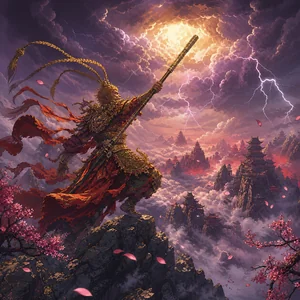 Black Myth: Wukong
 Blades in the Dark
 Bloodborne
 Brindlewood Bay
 Call of Cthulhu
 Cartography
 Celtic Mythology
 Changeling
 Chinese Mythology
 Chronicles of Narnia
 Civilization
 Clash of Clans
 Conlangs
 Cosmere
 Cosmic Horror
 Cozy Fantasy
 Cradle
 Creatures
 Crescent City
 Cryptids
 Cult of the Lamb
 Cultivation
 Daggerheart
 Dark Souls
 Demon: The Fallen
 Diablo
 Discworld
 Disney
 Dota 2
 Dragon Age
 Dragons
 Dungeons & Dragons
 Egyptian Mythology
 Elden Ring
 Elder Scrolls
 Eternal Strands
 Fae
Fae Final Fantasy
 Game of Thrones
 Genshin Impact
 God of War
 Gothic Horror
 Greek Mythology
 Guild Wars
 Hades II
 Hades
Hades Harry Potter
 Hindu Mythology
 His Dark Materials
 Hollow Knight
 Horror
 Indonesian myth
 Inheritance Cycle
 Japanese myth
 Korean Mythology
 League of Legends
 Legend of Zelda
 Legends of Runeterra
 LitRPG
 Lord of the Rings
 Lost Ark
 Magic: The Gathering
 Mayan Mythology
 Mesopotamian myth
 Minecraft
 Mistborn
 Monster Hunter
 Mythology
 Norse Mythology
 Path of Exile
 Pathfinder
 Percy Jackson
 Persian Mythology
 Pirate Borg
 Religion
 Rift
Rift RuneScape
 Sea of Thieves
 Sekiro
 Shadowdark
 Slavic Mythology
 Stardew Valley
 Steampunk
 Stonetop
 Stormlight Archive
 Tainted Grail
 The Dark Crystal
 The Dark Eye
 The Wheel of Time
 The Wildsea
 The Witcher
 Vampire: Masquerade
 Wakfu/Dofus
 Warhammer
 Werewolf Apocalypse
 Wings of Fire
 World of Darkness
 World of Warcraft
 Wuchang
 Wuxia
Wuxia Xianxia