More generators, writing tools and storytelling resources.
Origins and Meaning
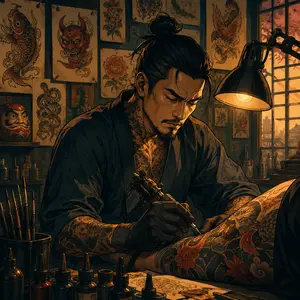
The concept of covering an entire arm in a unified tattoo design has roots in tribal traditions across Polynesia, Japan, and Borneo, where geometric patterns signified status, lineage, and spiritual protection. Modern sleeve tattoos evolved from these early conventions into a sophisticated art form that treats the arm as a single canvas rather than a collection of unrelated patches.
Unlike smaller tattoos that can stand alone, a sleeve requires every element to earn its place. The composition must flow from wrist to shoulder, maintain visual rhythm, and provide transitions that guide the eye without interruption. The most successful sleeve themes feel inevitable in their placement, as though each element could only exist in that exact position along the arm.
Choosing Your Theme
When selecting a sleeve theme, consider the story you want to carry on your skin. A narrative sleeve tells a story across the arm, with each section building on what came before. A visual sleeve prioritizes color flow and compositional balance over storytelling. A memorial sleeve embeds personal meaning into symbols and imagery that hold significance only for you.
The focal piece anchors the entire design. It typically occupies the upper arm or shoulder, where it commands the most attention and provides visual weight to balance the composition. Your focal piece should be the element you most want to see when you look in the mirror. Everything else on the sleeve exists to support and frame that centerpiece.
Color Strategy
Color binds a sleeve together. A monochromatic blackwork sleeve creates coherence through line weight and pattern density without relying on chromatic variety. A color story sleeve uses hue progression to create depth and movement across the arm. Watercolor sleeves rely on intentional white space to maintain legibility against the flow of color washes and prevent the design from becoming muddy.
Transition Planning
The transition zone between focal pieces determines whether a sleeve feels cohesive or disjointed. Common transition strategies include morphing one element into another through visual continuation, creating geometric bridges that connect disparate imagery, and using negative space as a deliberate pause between heavy visual sections. The space between major elements is just as important as the elements themselves.
Identity and Cultural Weight
Sleeve tattoos carry social meaning in different contexts. In Japanese tradition, full-arm coverage with mythological imagery connects to centuries of artistic precedent and cultural codes of meaning. In Western biker culture, elaborate blackwork sleeves have signified belonging, resilience, and group identity. Celtic knotwork sleeves express heritage and spiritual connection through intricate interlace patterns that have symbolic as well as aesthetic function.
Your sleeve theme should resonate with your own identity or the story you want to communicate. A sleeve is never neutral. It announces something about who you are, what you value, or the journey you have taken to reach this moment.
Tips for Planning
- Start with the focal piece and build outward. Everything else on the sleeve serves the centerpiece.
- Consider how your sleeve will age over decades. Fine line work blurs faster than bold solid shapes.
- Account for muscle and bone structure when placing elements. Design components may distort over biceps or forearm curves.
- Reserve the inner arm for elements you can see yourself viewing daily. That visibility affects your ongoing relationship with the work.
- Think about clothing coverage and professional context. Full sleeves show in short sleeves; quarter sleeves show in long sleeves.
Inspiration Prompts
- What natural element would you choose to represent your life path: a river, a mountain, a forest, or a celestial body?
- Do you want your sleeve to tell a single story from beginning to end, or function as a visual composition without narrative?
- Is there a cultural tradition or artistic style that speaks to your heritage or aesthetic preferences?
- What emotions or states of mind do you want to carry on your arm: calm, power, remembrance, transformation?
- Would a memorial element honor someone who shaped your life, or would that create unwanted沉重?
How long does a full-sleeve tattoo take to complete?
A full sleeve typically requires 40 to 60 hours of tattoo work spread across multiple sessions over 6 to 18 months. The wrist and elbow areas take longer due to bone proximity and skin movement. Artists often recommend starting with the focal piece and completing it before moving to other sections.
Can I combine different artistic styles in one sleeve?
Yes, but the transition between styles requires careful planning. Successful hybrid sleeves use a unifying element such as color palette, line weight, or a thematic bridge to make disparate styles feel intentional rather than accidental. Many artists prefer to establish one dominant style and use the second as accent rather than equal visual weight.
How do I cover an existing tattoo with a sleeve?
Cover-up sleeves work by integrating the old work into the new design rather than simply layering over it. Strategies include using dark backgrounds to swallow old ink, transforming old imagery into new elements, or placing a dramatic focal piece over the area with highest old work density.
What is the most durable sleeve design?
Blackwork sleeves with solid fills and bold lines age best because the contrast holds up against skin changes over decades. Fine-line botanical work and watercolor styles require more touch-up sessions to maintain crispness. Geometric patterns and Japanese traditional work balance durability with visual complexity.
How do I choose between a full sleeve and a half sleeve?
Consider your lifestyle, workplace expectations, and commitment level. A half sleeve offers more flexibility for professional settings where full coverage may draw unwanted attention. A full sleeve creates a complete narrative canvas but requires greater investment in time, cost, and permanent body modification. Some people start with a half sleeve and extend later once they see how the first section heals.
What are good Sleeve Tattoo Themes?
There's thousands of random Sleeve Tattoo Themes in this generator. Here are some samples to start:
- A phoenix rises from wrist embers to shoulder flame, with ember particles scattering down the forearm in fading orange.
- Deep crimson roses with black thorns spiral upward, with one perfect bloom as the focal piece at the shoulder.
- Roses climb the arm with thorns morphing into bare branches where the color fades to skin, then cherry blossoms emerge in the negative space.
- Large scale sacred geometry in pure black ink: flower of life, metatron's cube, and star tetrahedron connected across the arm.
- Wind god and thunder god flanking a central cherry blossom branch, with storm lines flowing into petal scatter patterns.
- English garden in full bloom: roses, peonies, and hydrangeas climbing from wrist to shoulder with a garden gate at the top.
- Andromeda galaxy spiral arm visible at wrist, transitioning to milky way core at shoulder with nebula colors between.
- Grandfather clock with portrait inset in the clock face, family heritage symbols around the border.
- Triangular tessellation transitioning from black to white, dots appear in the white sections creating a pattern shift.
- Fenrir the wolf bound by magical chains, prophecy runes glowing along the restraint lines.
About the creator
All idea generators and writing tools on The Story Shack are carefully crafted by storyteller and developer Martin Hooijmans. During the day I work on tech solutions. In my free hours I love diving into stories, be it reading, writing, gaming, roleplaying, you name it, I probably enjoy it. The Story Shack is my way of giving back to the global storytelling community. It's a huge creative outlet where I love bringing my ideas to life. Thanks for coming by, and if you enjoyed this tool, make sure you check out a few more!

 Saved ideas
  Academia
 Aesthetic
 AI Tools
 Beauty
 Beer
Beer Business
 Call of Duty
 Calligraphy
 Cars
Cars Code
Code Coffee
 Cosplay
 Cottagecore
 Cozy
Cozy Crafts
 Fashion
 Festivals
 Food
Food Handles
 Holidays
 Mixology
 Music
Music Office
 Parenting
 Party
Party Podcasting
 Productivity
 Professions
 Project Management
 Ships
Ships Sports
 Tattoo
 Tech Events
 TV
TV Twitch
 Wedding
 Witchy
 Wrestling