More generators, writing tools and storytelling resources.
Where dark academia style gets its hold
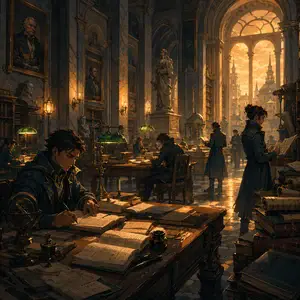
Dark academia clothing pulls from several wardrobes at once. Part of it comes from British and Ivy tailoring: tweed blazers, wool trousers, penny loafers, club collars, overcoats, scarves, and satchels that look like they have carried too many books. Another part comes from Gothic revival architecture and the romance of older universities, where stone corridors, chapel bells, oak tables, and green reading lamps turn clothing into atmosphere. The style also borrows from literary cinema, boarding-school uniforms, museum-going habits, and the visual language of handwritten notes, fountain pens, and secondhand bookshops. That is why the best dark academia outfit is never just a blazer over black. It feels like a life arranged around study, weather, ritual, and the desire to be taken seriously by history itself.
How to build a look that feels studied rather than costumed
Start with weight and structure
The quickest way to miss the mood is to treat dark academia as a print or a slogan. The look begins with fabric weight. Wool, tweed, corduroy, flannel, cotton poplin, cashmere, leather, and dense knitwear all signal seriousness because they hold shape and age well. Even when the silhouette is soft, the materials should imply use: the nap of a blazer elbow, the shine of leather satchel corners, the faint collapse of a cardigan cuff. Decide which piece carries the authority in the outfit. A checked blazer creates one kind of discipline. A long overcoat creates another. If the anchor piece feels convincing, the rest of the look can quiet down around it.
Use layers to tell the schedule
Dark academia works because it suggests movement between spaces. The same person may cross a wet quadrangle, sit in a seminar, disappear into special collections, then end the night at a recital or late coffee. Layers should show that schedule. A turtleneck under a vest says something different from a blouse under a cardigan and trench. Scarves, gloves, umbrellas, tights, and heavy socks matter because they imply weather and travel, not just decoration. Accessories should feel functional first. A fountain pen, margin notes, color-tabbed books, archive gloves, or an overfilled tote can make a look feel lived in more quickly than a dramatic brooch added for effect.
Keep the palette narrow but not flat
The palette usually lives in brown, charcoal, black, cream, oxblood, forest, taupe, and muted navy, but the point is not to make everything identical. Contrast matters. Cream against deep wool reads more intellectual than all-black minimalism. Tobacco corduroy beside a smoke shirt feels warmer than pure monochrome. Plaids, herringbone, pinstripes, matte knits, and lightly polished leather create enough surface variation that the outfit holds interest in dim light. One disciplined accent, such as a signet ring, burgundy knit, brass pen clip, or checked scarf, is often enough.
Why the aesthetic carries identity weight
People use dark academia clothing to signal more than taste. The style can communicate discipline, restraint, melancholy, ambition, romanticism, queerness, nostalgia, and a fascination with archives, languages, art history, theology, or old institutions. That is why details matter. A look built from thrifted wool, repaired loafers, and handwritten notes says something different from one made of immaculate costume replicas. For writers and character designers, the outfit can reveal class background, relationship to scholarship, emotional weather, and even academic field. A classics student, a conservator, a debate prodigy, and a poet all belong to dark academia, but they do not dress with the same priorities.
Tips for writers and stylists
- Choose one authority piece first, such as the blazer, overcoat, skirt, satchel, or shoes, and let the rest of the outfit support it.
- Use fabrics that have texture under low light: tweed, corduroy, brushed wool, cotton poplin, dense knits, velvet trim, and worn leather.
- Match the look to a location. Archive basements, chapel concerts, museum dates, dorm desks, and rainy stone quads each want different layers and props.
- Let at least one item show use. Scuffed loafers, wrinkled notes, damp umbrella fabric, softened cuffs, and bent book corners keep the outfit believable.
- If you are styling a character, ask what they actually carry every day. The satchel contents often tell a stronger story than the coat itself.
- Avoid dressing every result in identical black. Dark academia feels richer when cream, tobacco, moss, oxblood, and charcoal all have room to breathe.
Inspiration prompts
Use these questions when you want the outfit to become a character cue, a photo brief, or a moodboard with clearer intent.
- Which academic space is this person headed toward, and how should the clothing prepare them for that room?
- What part of the outfit was inherited, thrifted, repaired, or kept for years because it still feels essential?
- Does the look suggest confidence, exhaustion, secrecy, flirtation, grief, or intellectual vanity before the person speaks?
- What object in the hands or pockets reveals the field of study more quickly than any logo would?
- If the weather shifts mid-scene, which layer becomes the emotional center of the outfit?
Frequently Asked Questions
Explore the most common questions about the Dark Academia Outfit Generator and how it can help you build layered academic looks with sharper narrative detail.
How does the Dark Academia Outfit Generator work?
Each click surfaces one outfit brief from a pool of 500 combinations built around tailoring, knit layers, shoes, accessories, and a setting that gives the look context.
Can I use these looks for a specific dark academia mood?
Yes. Some results lean scholarly and polished, while others feel rain-soaked, severe, romantic, secretive, or slightly disheveled from long hours in the stacks.
Are the outfit ideas varied enough for repeat use?
They are. The collection moves through libraries, lectures, archives, museums, station platforms, dorm rooms, and formal evening scenes so the mood keeps shifting.
How many outfits can I generate?
You can generate as many outfit briefs as you want, which makes the tool useful for styling boards, character design, moodboards, cosplay planning, and captions.
How do I save a favorite outfit?
Click a result to copy it instantly, or use the heart icon to keep a shortlist while you compare silhouettes, fabrics, shoes, and accessories.
What are good Dark academia outfits?
There's thousands of random Dark academia outfits in this generator. Here are some samples to start:
- Green lamp: ink shirt, plaid blazer, kilt skirt, stacked boots, rain umbrella, chalk dust.
- Chapel classroom after rain: ivory oxford, graphite slacks, ankle boots, journal satchel, duffle coat, cold arches.
- Rose stairs: oat vest, camel overcoat, cord skirt, mary janes, leather notebook, fogged glass.
- For Conservation table, cape coat over ink shirt, ankle skirt, heeled oxfords, brass keys, carved oak.
- Museum stairs: black polo, cord jacket, charcoal trousers, stacked boots, muted scarf, debate hour.
- leather folio in pocket, wool coat over burgundy sweater, cigarette pants, dark derbies, Reading stair, fogged glass.
- Print queue: camel knit, duffle coat, cigarette pants, stacked boots, overfull tote, midnight hush.
- Station cafe after rain: taupe rollneck, plaid midi, ankle boots, rail ticket, tweed blazer, candle smoke.
- Bring silver pen to Banquet table
- checked vest, black polo, kilt skirt, lace brogues, bookshop light.
- Bring hair pencil to Quiet corridor
- academic jacket, ink shirt, cigarette pants, lug loafers, elm branches.
About the creator
All idea generators and writing tools on The Story Shack are carefully crafted by storyteller and developer Martin Hooijmans. During the day I work on tech solutions. In my free hours I love diving into stories, be it reading, writing, gaming, roleplaying, you name it, I probably enjoy it. The Story Shack is my way of giving back to the global storytelling community. It's a huge creative outlet where I love bringing my ideas to life. Thanks for coming by, and if you enjoyed this tool, make sure you check out a few more!

 Saved ideas
  Academia
 Aesthetic
 AI Tools
 Beauty
 Beer
Beer Business
 Call of Duty
 Calligraphy
 Cars
Cars Code
Code Coffee
 Cosplay
 Cottagecore
 Cozy
Cozy Crafts
 Fashion
 Festivals
 Food
Food Handles
 Holidays
 Mixology
 Music
Music Office
 Parenting
 Party
Party Podcasting
 Productivity
 Professions
 Project Management
 Ships
Ships Sports
 Tattoo
 Tech Events
 TV
TV Twitch
 Wedding
 Witchy
 Wrestling