More generators, writing tools and storytelling resources.
Origins and vibes
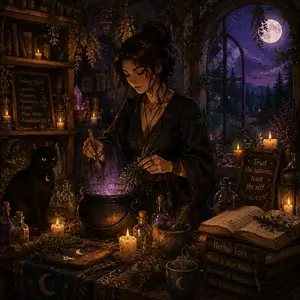
The witchy aesthetic is less about literal spellcasting and more about atmosphere: warm candlelight, handwritten notes, apothecary jars, and the quiet confidence of someone who curates their space with intention. Modern witchcore borrows from folklore, herbalism, and the visual language of old books, while also mixing in thrifted fashion, soft goth details, and cozy cottage textures. The best version of the vibe feels lived in, not staged. You can see it in a slightly scorched match dish, a ribbon bookmark trailing from a journal, or a mug of tea beside a tarot spread. The point is mood: a sense of ritual in everyday choices.
Building a witchy look
Altars that look real
If you include an altar, keep it practical. A small tray with a candle, a dish of salt, and a jar of herbs reads more authentic than a crowded shrine. Choose one color story, then let a single contrasting item pop, like citrus peel on dark linen. Imperfection sells it: curled paper corners, smudged graphite, scuffed brass. Lighting matters more than props, so prioritize lamp glow, window dusk, and a few reflective surfaces that catch flicker.
Herbs, labels, and tools
Kitchen-witch styling is grounded and tactile. Use ingredients people recognize: rosemary, bay, cloves, citrus, honey, oats, and tea. Add handwritten labels that look slightly rushed, as if you are mid-project. Tools should be ordinary and reimagined: a spoon as a stirrer for intentions, a mortar used for seasoning, a notebook that holds both recipes and character notes. This keeps the aesthetic from turning into costume.
Fashion without cosplay
Witchy outfits work when they mix softness with structure. Velvet or lace against denim, boots with a flowing skirt, a plain black dress with one talisman piece. Let jewelry tell the story in small details: a crescent pendant, a locket with a pressed leaf, mismatched moon earrings. Keep hair and makeup simple but deliberate, like smoky eyes with a neutral lip or deep green nails on short hands.
Identity and meaning
For many people, witchy aesthetics are a language of self-definition: a way to claim calm, boundaries, and personal rituals in a loud world. In fiction, the vibe can signal a character who pays attention, collects small truths, and treats domestic skills as power. It can also hint at lineage, secrecy, or a chosen family, depending on how you frame it. The key is specificity. A character who labels jars and keeps a moon chart has different energy than one who carries a bell on their keyring for focus.
Tips for writers
- Anchor the vibe to one daily habit: tea, journaling, foraging walks, or late-night baths.
- Use props that do something on the page: a key that opens a drawer, a candle that marks time.
- Mix modern details with old textures, like a label maker next to a wax seal stamp.
- Show a small flaw, such as spilled wax or smudged ink, to keep scenes believable.
- Let scent and sound carry mood: bell chimes, citrus steam, clinking rings, page turns.
Inspiration prompts
Use these questions to turn aesthetics into scenes and character choices.
- What object on their desk functions as a comfort charm rather than a superstition?
- Which herb do they keep around for scent, and what memory does it carry?
- How does their altar change between seasons, and what stays constant?
- What is the one rule they write in the margin when they need boundaries?
- What piece of jewelry do they touch when they need courage, and why?
Frequently Asked Questions
Answers to common questions about the Witchy Aesthetic Generator and how it helps you shape a consistent brief.
What makes an aesthetic feel witchy without becoming a costume?
Lean on everyday materials: tea, herbs, paper, worn metal, and warm light. One or two symbolic details are enough when the rest feels practical and lived in.
How can I design an altar scene that looks believable?
Start small with a tray, a candle, and one herb jar. Add one personal item, like a note or key, and let the lighting do most of the storytelling.
Which details read as witchcore on social media captions?
Short sensory anchors work well: candle wax, ink stains, citrus steam, moon phases, and thrifted textures. Keep the voice grounded, not prophetic.
Can I use witchy aesthetics for non-magical characters?
Absolutely. Treat it as mood and identity rather than powers. A character can love tarot imagery, journaling, and herbs without practicing magic at all.
What is a fast way to save ideas I like?
Generate a few briefs, click to copy your favorites, and keep a short list. If a result sparks a scene, save it with a quick note about place, time, and emotion.
What are good Witchy aesthetic ideas?
There's thousands of random Witchy aesthetic ideas in this generator. Here are some samples to start:
- Brass candlesticks lean over a salt circle, wax pooling like calm tides.
- A saucepan simmers with citrus peel, fogging the windows in slow halos.
- The tarot box is worn at the corners, like a favorite paperback.
- The journal lies open to a mood board of herbs, fabrics, and brass.
- Worn leather boots carry you through rain, leaving confident footprints.
- You tuck a feather into your hatband, then pretend it was always there.
- You wear a signet ring, not for lineage, for confidence.
- You place herbs in a bowl of water, letting fragrance do the work.
- You soak your hands in warm water and sigh like it’s permission.
- You doodle tiny moons in the margin during a call, staying present.
About the creator
All idea generators and writing tools on The Story Shack are carefully crafted by storyteller and developer Martin Hooijmans. During the day I work on tech solutions. In my free hours I love diving into stories, be it reading, writing, gaming, roleplaying, you name it, I probably enjoy it. The Story Shack is my way of giving back to the global storytelling community. It's a huge creative outlet where I love bringing my ideas to life. Thanks for coming by, and if you enjoyed this tool, make sure you check out a few more!

 Saved ideas
  Academia
 Aesthetic
 AI Tools
 Beauty
 Beer
Beer Business
 Call of Duty
 Calligraphy
 Cars
Cars Code
Code Coffee
 Cosplay
 Cottagecore
 Cozy
Cozy Crafts
 Fashion
 Festivals
 Food
Food Handles
 Holidays
 Mixology
 Music
Music Office
 Parenting
 Party
Party Podcasting
 Productivity
 Professions
 Project Management
 Ships
Ships Sports
 Tattoo
 Tech Events
 TV
TV Twitch
 Wedding
 Witchy
 Wrestling