More generators, writing tools and storytelling resources.
Why Light Academia Feels Perennially Fresh
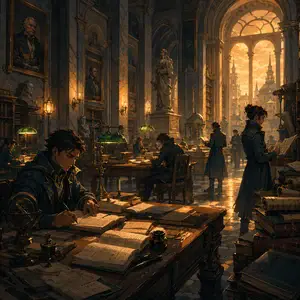
Light academia took shape online as a softer answer to darker school aesthetics. Instead of storm clouds, candles, and gothic severity, it prefers window light, cream knitwear, polished oak, and the quiet optimism of a page filled in clean handwriting. Its references usually come from old universities, museum halls, secondhand bookshops, language classes, botanical houses, and cafes where study looks social rather than isolated. The appeal is not strict historical accuracy. It is selective atmosphere. A loaf of bread on paper, a marked copy of Woolf, a trench coat over a white blouse, and a warm ceramic cup can suggest a whole life organized around reading, note taking, and patient curiosity. That mix of order and softness is why the aesthetic travels so well into fashion, room styling, character design, and photo direction.
How to Build a Light Academia Scene
Start with light and architecture
The quickest way to lose the mood is to ignore the setting. Light academia relies on spaces that feel breathable: library windows, stone courtyards, museum atriums, greenhouse benches, and cafe corners with gentle daylight. Pale walls, wood tables, brass details, notebooks, and cream or sand fabrics all help, but the real anchor is how light moves across them. A scene should feel morning or early afternoon, not theatrical midnight. If you are styling a room or writing a scene, think first about what the sun is touching. A strong prompt might begin with a reading balcony, a train carriage table, or a study bench beside potted herbs rather than with clothes alone.
Dress the desk and the person together
Unlike many fashion aesthetics, light academia is not only about clothing. It works when the outfit, the objects, and the activity all agree. Loafers, pleated skirts, cardigans, trousers, ribbon blouses, and soft coats belong beside fountain pens, clipped essays, postcards, ceramic cups, index cards, and hardbacks with notes in the margins. The desk is part of the look. The notebook is part of the outfit. Even food and drink matter because they change the tone. Pear slices, croissants, tea, and latte foam keep the world bright and deliberate. When the generator gives you a prompt, read it as a complete arrangement rather than a shopping list.
Keep it studied, not theatrical
Light academia gets weaker when everything looks untouched. The charm comes from evidence that somebody is actually thinking, revising, or wandering between classes. Add bent receipts, penciled quotations, a library slip, a half-finished paragraph, or a scarf thrown over the chair. The mood should feel composed, but not sterile. It is closer to lived scholarship than to costume. That is also why restraint matters. One pressed flower or one ribbon marker usually works better than a table overloaded with props. The best scenes suggest discipline, but they still leave room for life to interrupt the arrangement.
What the Aesthetic Communicates
Light academia signals a gentle kind of ambition. It romanticizes learning, but it does so through warmth rather than pressure. A character framed in this style tends to read as observant, hopeful, bookish, reflective, and socially quiet without seeming withdrawn. In visual terms, the aesthetic also communicates trust in routine: morning classes, marked passages, museum afternoons, train rides with notebooks, and the belief that small rituals shape a meaningful life. That makes it useful far beyond outfit ideas. Writers use it for student characters, artists, language learners, and thoughtful love interests. Designers use it for desk setups, stationery sets, bedrooms, and moodboards that need intelligence without austerity.
Tips for Writers, Stylists, and Moodboard Builders
- Choose one setting first, such as a reading room, cafe, gallery, train, greenhouse, or riverside bench, then let every object support that place.
- Keep the palette light but textured. Cream, oat, beige, soft brown, pale olive, faded gold, and paper white usually carry the mood better than stark contrast.
- Add proof of use. Marginalia, bookmarks, ticket stubs, folded timetables, and half-finished notes make the scene feel inhabited.
- Balance elegance with practicality. Loafers, cardigans, and blazers should look wearable enough for walking, studying, and carrying books.
- Use prompts as combinations, not fixed rules. Swapping the drink, fabric, or location can shift the same brief from campus to travel to home styling.
Inspiration Prompts
Light academia becomes more convincing when you imagine behavior, not only palette. Ask where the notebook came from, why the page is marked, what class or museum lies ahead, and whether the person in the scene is studying seriously or simply trying to feel closer to a life of reading. The best prompts open a small narrative, not just a decorative still life.
- What object in the scene proves the person has already spent an hour thinking there?
- Does the space feel more like a campus, a city museum, a quiet apartment, or a train between destinations?
- Which detail carries the warmth: the cup, the cardigan, the wood table, the sun, or the handwriting?
- What would make the prompt feel too polished, and what small imperfection would fix it?
- If this aesthetic belonged to a character, what subject would they be learning with such care?
Frequently Asked Questions
Explore the most common questions about the Light Academia Aesthetic Generator and how it helps you build bookish, bright, and believable study moods.
How does the Light Academia Aesthetic Generator work?
It combines light academia signals such as soft daylight, notebooks, museum spaces, tea, knitwear, and annotated books into short prompts that feel usable for styling, captions, and scene planning.
Can I use it for outfits, rooms, or writing scenes?
Yes. Each result can guide clothing, desk styling, room moodboards, photography direction, captions, or character scenes because the prompts join objects, clothing, light, and setting together.
Are the light academia prompts unique?
The generator is built for broad variation across libraries, campuses, cafes, galleries, greenhouses, and travel scenes, so you can keep exploring without getting the same feeling every time.
How many light academia ideas can I generate?
You can generate as many as you need for moodboards, writing references, wardrobe planning, aesthetic captions, stationery concepts, or slow-living visual direction.
How do I save my favorite prompts?
Click a result to copy it quickly, then keep the strongest prompts in notes, screenshots, or your save list so you can compare library, cafe, greenhouse, and travel moods later.
What are good light academia aesthetics?
There's thousands of random light academia aesthetics in this generator. Here are some samples to start:
- Stack cream paperbacks beside a honey latte under the east library window.
- Tie your hair with ribbon before rereading the passage marked for discussion.
- Hold the cappuccino with both hands and reread the tender paragraph.
- Sketch the staircase curve beside your coffee ring and date.
- Read pastoral verse under glass while rain taps the roof lightly.
- Wear a soft ivory pullover and handwritten quotations into seminar.
- Bring hotel-window sunlight, cream knitwear, and the second chapter downstairs.
- Fasten a brooch, a cream cable knit, and a patient budget.
- Set the mug just close enough to warm the palette.
- Shape the flowers, fruit, and notes into an afternoon that looks intentional.
About the creator
All idea generators and writing tools on The Story Shack are carefully crafted by storyteller and developer Martin Hooijmans. During the day I work on tech solutions. In my free hours I love diving into stories, be it reading, writing, gaming, roleplaying, you name it, I probably enjoy it. The Story Shack is my way of giving back to the global storytelling community. It's a huge creative outlet where I love bringing my ideas to life. Thanks for coming by, and if you enjoyed this tool, make sure you check out a few more!

 Saved ideas
  Academia
 Aesthetic
 AI Tools
 Beauty
 Beer
Beer Business
 Call of Duty
 Calligraphy
 Cars
Cars Code
Code Coffee
 Cosplay
 Cottagecore
 Cozy
Cozy Crafts
 Fashion
 Festivals
 Food
Food Handles
 Holidays
 Mixology
 Music
Music Office
 Parenting
 Party
Party Podcasting
 Productivity
 Professions
 Project Management
 Ships
Ships Sports
 Tattoo
 Tech Events
 TV
TV Twitch
 Wedding
 Witchy
 Wrestling