More generators, writing tools and storytelling resources.
Where cottagecore gets its pull
Cottagecore draws on older domestic imagery, but its appeal is not only nostalgia. It gathers together recurring symbols of slowness, care, seasonality, and handmade comfort. Cottage gardens, berry-stained aprons, jam jars, iron bedsteads, lace curtains, enamel pitchers, wildflower bouquets, and handwritten recipe cards all carry the same promise: life can feel textured instead of optimized. Part of the style comes from pastoral art, children's book illustrations, British and American countryside imagery, folk craft revival, and the visual afterlife of rural kitchens on film and social platforms. Yet the mood survives because it is tactile. Linen wrinkles, chipped ceramics, drying herbs, and weathered wood all suggest a life that is used, tended, and loved rather than staged into sterile perfection.
How to shape a cottagecore look into something usable
Start with the labor, not only the lace
The strongest cottagecore images usually include a task. Someone is kneading dough, mending a cuff, tying herbs, washing radishes, sorting buttons, labeling jam, or carrying pears in an apron fold. Labor keeps the aesthetic from becoming a pile of props with no heartbeat. If you are using the generator for photography, branding, or fiction, identify the small action at the center of the frame first. Once the labor is clear, the supporting details make more sense: floured fingers belong near a pie crust, and line-dried sheets belong near a wash bucket and clothespins.
Let the palette come from materials
Cottagecore color works best when it feels found rather than imposed. Think oat linen, butter yellow, blackberry jam, faded rose, willow green, duck-egg blue, soap white, bark brown, or clove. These tones come from fabric, fruit, enamelware, weather, and old paint, not from abstract trend forecasting. If your board feels too costume-like, pull back from loud novelty prints and let raw cotton, chipped crockery, wood grain, dried petals, and soft daylight do more of the work.
Use captions like diary lines
A cottagecore caption should sound personal, sensory, and lightly observant. It is not a sales slogan. It feels closer to a note in the margin of a recipe book, a line from a slow morning, or a memory saved before supper. The best lines name one concrete thing, then widen into mood. A mention of jam cooling, rain on panes, or stems in a jug often carries more feeling than a grand declaration about simplicity.
Why the aesthetic carries identity weight
People often reach for cottagecore when they want softness without emptiness. The aesthetic offers domesticity without the polished pressure of luxury lifestyle branding, and romance without the sharp glamour of fashion minimalism. It can suggest queerness, self-authorship, rural fantasy, craft-centered living, seasonal attention, or a refusal to flatten everyday care into invisible labor. Because of that, details matter. A patched sleeve means something different from a brand-new prairie dress. A handwritten pantry label feels more grounded than a generic bouquet. The mood becomes convincing when the life inside it seems inhabited.
Tips for writers and stylists
- Anchor every board in one domestic action, such as baking, washing, picking, reading, mending, or preserving, before adding decorative details.
- Choose materials with age and texture: linen, cotton, stoneware, enamel, wicker, pressed flowers, seed packets, hand labels, and weathered wood.
- Keep color stories seasonal. Early spring cottagecore does not need the same palette, food, or flowers as a late-apple harvest scene.
- Include one imperfection that proves the world is lived in, such as muddy clogs, a mended cuff, jam drips, wrinkled sheets, or a cracked glaze edge.
- When writing captions, prefer one vivid image and one quiet emotion over abstract lines about slowing down or romanticizing life.
- For character design, match the objects to routine: a beekeeper, bookseller, herb grower, pastry apprentice, or village postkeeper each carries different props.
Inspiration prompts
Use these questions when you want the result to become a full story prompt, shoot list, or character board rather than a single pretty phrase.
- What daily chore in this scene would reveal the person's values before they ever speak?
- Which season is shaping the palette here, and what food, flowers, weather, or fabric would prove it instantly?
- What object in the frame has clearly been repaired, inherited, or handled for years?
- If the caption were written in a diary instead of on social media, what detail would it linger on?
- How could this pastoral softness coexist with ambition, grief, flirtation, solitude, or a hidden plot?
Frequently Asked Questions
Explore the most common questions about the Cottagecore Aesthetic Generator and how it can help you build moodboards, captions, and soft pastoral concepts.
How does the Cottagecore Aesthetic Generator work?
Each click surfaces one of 500 short cottagecore briefs built around setting, craft, palette, objects, and the kind of caption language people actually save to a moodboard.
Can I aim the results toward a specific cottagecore mood?
This version does not use filters, but the pool already ranges from baking scenes and flower markets to rainy reading corners, orchard harvests, and lakeside evenings.
Are the cottagecore aesthetics varied enough for repeat use?
Yes. The database mixes domestic rituals, seasonal details, fabrics, foods, village errands, and folklore keepsakes so repeated clicks still feel distinct instead of recycled.
How many cottagecore ideas can I generate?
You can generate as many ideas as you want, which makes the tool useful for moodboards, social captions, visual writing prompts, brand shoots, and character styling.
How do I save a favorite aesthetic brief?
Click the result to copy it instantly, or use the heart icon to keep a shortlist while you compare palettes, props, and scene directions.
What are good Cottagecore aesthetics?
There's thousands of random Cottagecore aesthetics in this generator. Here are some samples to start:
- Capture basil seedlings in chipped terracotta, pair them with oat linen, and caption the frame before breakfast.
- Arrange cardamom buns on brown paper, then add a sprig of thyme for softness.
- Hang the camisole high enough for the foxgloves to brush the hem.
- Bring a peach tart, two mismatched cups, and one letter you never send.
- Capture a quilted window seat, rain on the pane, and a book with foxed edges.
- Choose visible mending in berry thread instead of pretending nothing ever wore out.
- Photograph pear halves on a board, cider nearby, and a ladder resting in the grass.
- Capture a brown paper loaf tucked under ranunculus and a seed packet peeking out.
- Stage two enamel mugs on the jetty with candle gold and willow green.
- Capture seed envelopes in a bread tin beside dried lavender and a yellowed field guide.
About the creator
All idea generators and writing tools on The Story Shack are carefully crafted by storyteller and developer Martin Hooijmans. During the day I work on tech solutions. In my free hours I love diving into stories, be it reading, writing, gaming, roleplaying, you name it, I probably enjoy it. The Story Shack is my way of giving back to the global storytelling community. It's a huge creative outlet where I love bringing my ideas to life. Thanks for coming by, and if you enjoyed this tool, make sure you check out a few more!

 Saved ideas
  Academia
 Aesthetic
 AI Tools
 Beauty
 Beer
Beer Business
 Call of Duty
 Calligraphy
 Cars
Cars Code
Code Coffee
 Cosplay
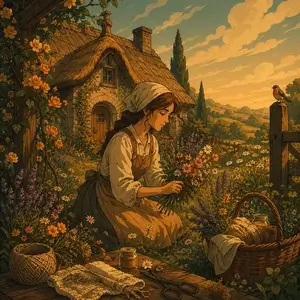 Cottagecore
 Cozy
Cozy Crafts
 Fashion
 Festivals
 Food
Food Handles
 Holidays
 Mixology
 Music
Music Office
 Parenting
 Party
Party Podcasting
 Productivity
 Professions
 Project Management
 Ships
Ships Sports
 Tattoo
 Tech Events
 TV
TV Twitch
 Wedding
 Witchy
 Wrestling