More generators, writing tools and storytelling resources.
Ruined cities are where the setting becomes personal
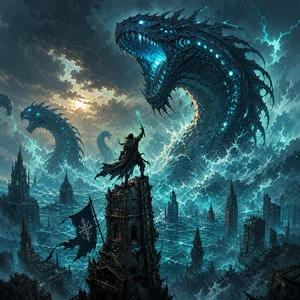
Tides of Annihilation works best when the apocalypse is not an abstract horizon but a place people can walk through, defend, lose, and remember. Urban siege locations matter because they turn collapse into geography. A drowned tram line becomes a supply route. A cathedral plaza becomes a rally point. A broken financial quarter becomes a field of watchfires and shattered sigils. In this kind of Arthurian end times aesthetic, the city is never only a city. It is also a memory palace of failed vows, civic pride, royal myth, and modern infrastructure being forced to serve heroic last stands. That is why a good location name has to do more than label a map square. It should suggest who fought there, what broke there, and why survivors still speak about the place as if it were a wound. A result like Grail Breach Causeway or Veiled Merlin Reach works because it fuses practical navigation with mythic weight. You can picture troops crossing it, refugees avoiding it, and relic hunters whispering about what opened beneath it.
The strongest siege location names in this setting also balance two histories at once. One history belongs to the recognizable city, with bridges, wards, station districts, market streets, river embankments, and administrative quarters. The other belongs to the Arthurian catastrophe layered over everything, with grail scars, broken vows, knightly bastions, prophetic towers, and supernatural floodlines. When those histories meet, the result feels specific instead of generic. A name such as London Bridge Lost District implies a real urban anchor that has been spiritually altered. A name such as Fey Spire Crossing implies a modern transit point transformed into something enchanted and militarized. That tension is exactly what makes the setting memorable. It lets you write locations that feel grounded enough for tactical scenes while remaining fantastical enough for prophecy, relic quests, and mythic horror.
How to choose a siege location name that carries story pressure
Start by deciding what role the place serves during the siege. Is it a choke point, an evacuation corridor, a fortified civic center, a cursed breach, or a reclaimed neighborhood that changes hands every night? A defensive line should sound different from a dead district or a hidden route beneath the city. Locations used by exhausted defenders often benefit from words that suggest endurance, structure, or jurisdiction, such as ward, line, gate, court, hold, or terrace. Places touched by magical catastrophe can lean on words like breach, hollow, rift, scar, drowned, or veiled. If a site is tied to knightly symbolism, relic warfare, or half remembered royal mythology, terms such as grail, crown, merlin, avalon, or excalibur can signal that cultural layer without turning the name into a parody.
Name by tactical function
A place where soldiers regroup should feel different from a place where civilians disappear. Causeway, crossing, gate, run, and underway style words imply motion and danger. Borough, quarter, ward, and district suggest territory to hold or lose. Enclave, sanctum, and vault imply occupation, secrecy, or a last reserve of power. Choosing the right functional word gives you instant scene logic.
Name by visible damage
Urban siege names become more convincing when the damage is legible inside the title. Ashen, sundered, broken, blighted, drowned, stormsplit, and scorched all tell the audience that the city has been rewritten by violence. Those descriptors are useful because they let one street or precinct feel distinct from the next without resorting to generic fantasy noise.
Name by mythic contamination
Tides of Annihilation is not ordinary post apocalyptic fiction. Myth leaks into concrete. Prophecy clings to rail lines. Heroic symbols become military assets and curses at the same time. When you add grail, wyvern, merlin, crown, pendragon, or avalon to an otherwise civic location, the city suddenly sounds like a battleground where legend and logistics are sharing the same air.
Why these names help maps, encounters, and chapters
A strong urban siege location name gives instant orientation to players and readers. It tells them whether to expect barricades, cathedral bells, fogged floodwater, sniper towers, refugee traffic, relic artillery, or knightly ruins stitched into office blocks. That is especially useful in campaigns or novels that jump between multiple fronts of the same city. If each zone has its own tone and naming logic, the city stops feeling like a blur of rubble and starts functioning like a living war map. You can send one squad toward Obsidian Kilburn for a grim push through fire blackened streets while another team slips through Lower Thamesmead Reach to protect boats, archives, or evacuees. The names themselves help maintain that contrast.
These names also create social texture. A place title can reveal who currently controls it, who used to live there, and what kind of propaganda surrounds it. Defenders may call a line heroic while scavengers call it cursed. Nobility might use older Arthurian wording while local residents cling to borough names inherited from the old city. That layered usage gives dialogue and narration more credibility. It also gives you room to show political fracture inside the siege. Two factions can be talking about the same district and still sound different because one is speaking in mythic terms while the other is speaking like a survivor trying to find a safe stairwell and a working water tank.
Practical tips for choosing the best result
When you evaluate generated names, test them against a few practical questions:
- Can you immediately imagine whether the place is a district, route, fortification, or ruin?
- Does the name sound like it belongs in a city under siege, not just in a generic fantasy realm?
- Is there a useful balance between recognizable urban geography and Arthurian mythic contamination?
- Would soldiers, civilians, and chroniclers all have a reason to repeat the name?
- Does the title suggest what kind of scene belongs there, such as evacuation, ambush, relic defense, or collapse?
- Could the name sit naturally on a map, chapter heading, or mission brief without extra explanation?
Prompts for building the scene around the name
Once you land on a result you like, deepen it with a few story prompts:
- What was this place before the siege, and what part of that earlier identity still survives in broken form?
- Which faction claims the location now, and what symbol or relic proves that claim?
- Why is this district strategically necessary even if it seems doomed to fall?
- What ordinary civilians still hide, trade, worship, or wait inside the area?
- What mythic event, knightly sacrifice, or magical breach permanently changed the place's reputation?
Urban Siege Location Generator FAQs
Common questions about naming ruined city fronts in Tides of Annihilation.
What kind of names does this generator create?
It creates names for breached districts, barricaded routes, fortified wards, river approaches, myth charged plazas, and other urban fronts suited to a ruined Arthurian city under siege.
How can I use these names in a campaign or novel?
Use them for map labels, mission objectives, chapter titles, battlefield callouts, evacuation corridors, supply routes, or memorable districts that need their own identity during a long urban war.
Why do these locations sound both modern and mythic?
That blend matches the setting. Tides of Annihilation feels strongest when recognizable city infrastructure collides with Arthurian symbols, relic warfare, prophecy, and supernatural ruin.
Can these names work for districts, checkpoints, and strongholds?
Yes. Many results are broad enough for neighborhoods and battle zones, while others fit choke points, walls, command posts, hidden sanctums, and relic defended redoubts.
What makes a siege location feel authentic to this world?
The best names combine civic geography, visible war damage, and mythic contamination. They sound useful on a military map but haunted by legend, sacrifice, and apocalypse.
What are good Tides of Annihilation siege locations?
There's thousands of random Tides of Annihilation siege locations in this generator. Here are some samples to start:
- Grail Breach Causeway
- Lower Thamesmead Reach
- Obsidian Kilburn
- London Bridge Lost District
- Fey Spire Crossing
- Dalston Fallen Hollow
- Camden Line
- Veiled Merlin Reach
- Euston Crossing
- Sundered Wapping
About the creator
All idea generators and writing tools on The Story Shack are carefully crafted by storyteller and developer Martin Hooijmans. During the day I work on tech solutions. In my free hours I love diving into stories, be it reading, writing, gaming, roleplaying, you name it, I probably enjoy it. The Story Shack is my way of giving back to the global storytelling community. It's a huge creative outlet where I love bringing my ideas to life. Thanks for coming by, and if you enjoyed this tool, make sure you check out a few more!

 Saved ideas
  Alien: Earth
 Apex Legends
 Assassin's Creed
 Babylon 5
 Battlestar Galactica
 Clair Obscur
 Cyberpunk 2077
 Cyberpunk RED
 Cyberpunk
 DC Universe
 Destiny
 Dieselpunk
 Doctor Who
 Dune
Dune Dystopia
 Eclipse
 EVE Online
 The Expanse
 Fallout
 Fortnite
 Halo
Halo Helldivers
 Horizon Zero Dawn
 Invincible
 Lancer
 Marvel Universe
 Mass Effect
 Mecha
Mecha No Man's Sky
 Overwatch
 Shadowrun
 Space Opera
 Split Fiction
 Star Trek
 Star Wars
 Starfinder
 Stargate
 The Culture
 The Last of Us
 Things from the Flood
 Tides of Annihilation
 Transformers
 Valorant
 Voltron
 Warhammer 40K
 Wildstar