More generators, writing tools and storytelling resources.
Why epic battle titles matter in Tides of Annihilation
In Tides of Annihilation, a battle is rarely just an exchange of steel. It is a civic wound. Districts drown, relic towers split, royal promises fail, and whole neighborhoods become shorthand for sacrifice. That means a strong battle title has to do more than sound loud. It has to capture the shape of a disaster and the legend that forms around it afterward. A name like The Reckoning for Tower Bridge or Ashen Reckoning of Holborn feels as if survivors would paint it on barricades, archivists would file it in broken war records, and resistance leaders would invoke it to explain why a district still refuses to kneel. The best titles carry atmosphere, location, and consequence in a single phrase. They suggest whether the fight was a doomed defense, a furious counterattack, a relic-fueled catastrophe, or a battle whose true horror arrived after the first victory cry. That layered feeling is essential to the ruined Arthurian-apocalypse tone. When the title sounds too generic, the war loses memory. When it sounds too modern or too clean, the setting loses its ceremonial ruin. A great battle title keeps both the myth and the wreckage alive.
How to choose a battle title that feels monumental and scarred
Start with the wound the battle leaves behind
The strongest titles usually sound as though they were coined after witnesses tried to explain the damage. Words such as Reckoning, Fall, Breaking, Siege, Night, Rout, Storming, and Rapture work because they summarize emotional aftermath as well as tactical action. Ask what the population remembers first. Did the battle drown a district in black water, shatter a royal artery, awaken dormant knights, or leave a bridge lined with chapel bells and ash? If the fight changed the geography or the faith of the city, the title should hint at that change. The March for Avalon Gate implies a campaign with symbolic stakes. The Breaking against the Folded Wyrm feels like a desperate collision with something ancient and unnatural. The title becomes stronger when it sounds earned by suffering, not assigned by a menu.
Let the battlefield carry the legend
Tides of Annihilation thrives on locations that already feel half sacred and half ruined. Bridge names, drowned wards, dock fronts, cathedral approaches, and relic keeps give a battle title immediate gravity because they anchor it in a place people can fear or mourn. Use a title that foregrounds the battlefield when the location itself became iconic, such as Battle for Westminster, Clash at Towerfall Ward, or Dawn over Docklands. These names are especially effective when you want the fight to feel public, visible, and city-defining. They tell players or readers where memory sticks. If the place is already loaded with symbolism, you do not need to overcomplicate the rest of the title. The emotional power comes from letting the landmark speak.
Use the opposing force to sharpen the tone
Some of the best titles do not center a district at all. They center what came through it. The Night against the Colossal Knights or The Breaking against the Folded Wyrm tells you that the conflict is remembered for the enemy that forced the city to reveal its deepest fear. This approach works well when the battle marks a first encounter, a failed containment effort, or a mythic escalation in the campaign. If the foe is tied to Grail engines, drowned heraldry, revenant cavalry, or storm-bent relic beasts, naming it in the title helps the event feel singular and historically loaded. It also tells your audience that the fight changed the rules of the world, not just the borders of a district.
What battle titles reveal about factions, memory, and propaganda
Battle titles also tell you who survived to name the event. A resistance cell might prefer The Stand at Tower Bridge because it emphasizes courage. A royal remnant could call the same disaster The Crownless Push at Whitehall, framing the defeat as a temporary reversal rather than a collapse of legitimacy. Dock militias, relic clergy, and scavenger crews would each preserve different names for the same night depending on what they lost and what they need others to believe. That makes battle titles useful worldbuilding tools. They do not simply label conflicts. They reveal competing narratives, class anxieties, and the politics of remembrance. If a title sounds liturgical, perhaps priests kept the record. If it sounds bitter and practical, perhaps the only witnesses were survivors who had no time for glory.
Tips for writers and game masters
- Match the title to one visible image, such as black tidewater over cathedral steps, shattered lances on commuter rails, or a knight's silhouette framed by siren fire.
- Decide whether the title was coined during the battle, immediately after it, or years later by historians or propagandists.
- Use place-led titles for public sieges and enemy-led titles for mythic first contacts, betrayals, or escalation points.
- Keep one official title and one survivor nickname if you want institutions and common people to remember the event differently.
- Pair every title with a human cost, because the setting grows stronger when the name implies who paid for the victory or the delay.
Inspiration prompts for your next shattered campaign
- What landmark became permanently uninhabitable after this battle, and what detail still proves the fighting never truly ended there?
- Who insists the battle was a victory even though the district was lost by dawn?
- Which relic or oath transformed this clash from a street defense into a mythic citywide event?
- What version of the title do civilians use when they want to blame the wrong faction for what happened?
- If the battle name is spoken aloud in a barracks or chapel, what memory does it summon first, pride, shame, grief, or fear?
Frequently Asked Questions
These answers cover the most common questions about using the Epic Battle Title Generator for ruined Arthurian wars, campaign arcs, and apocalyptic encounters.
How does the Epic Battle Title Generator work?
It draws from an original pool of battle phrases, ruined landmarks, and apocalyptic imagery so each result sounds like a conflict remembered across a shattered Arthurian city.
What makes a battle title feel right for Tides of Annihilation?
The strongest titles combine ceremonial grandeur with urban ruin, drowned memory, and the sense that the fight changed both the map and the myth of the setting.
Can I use these titles for boss fights, quests, or chapter names?
Yes. They work well for boss encounters, war chapters, mission briefings, campaign milestones, siege operations, and lore entries that need a memorable conflict label.
Should the title describe the place or the enemy?
Choose the place when the battlefield itself becomes legendary, and choose the enemy when the event is remembered for the force that broke the city's expectations.
How do I pick the best generated result?
Pick the title that best matches the battle's visual signature, political stakes, emotional aftermath, and the faction most likely to preserve the memory.
What are good TOA epic battle titles?
There's thousands of random TOA epic battle titles in this generator. Here are some samples to start:
- Ashen Reckoning of Holborn
- The March for Avalon Gate
- The Confrontation of Ruinspire Bridge
- The Reckoning for Tower Bridge
- The Ash War at Blackfriars Bridge Gate
- Battle for Westminster
- The Breaking against the Folded Wyrm
- Storming under the Hollow Fallen Round
- The Night against the Colossal Knights
- Dawn over Docklands
About the creator
All idea generators and writing tools on The Story Shack are carefully crafted by storyteller and developer Martin Hooijmans. During the day I work on tech solutions. In my free hours I love diving into stories, be it reading, writing, gaming, roleplaying, you name it, I probably enjoy it. The Story Shack is my way of giving back to the global storytelling community. It's a huge creative outlet where I love bringing my ideas to life. Thanks for coming by, and if you enjoyed this tool, make sure you check out a few more!

 Saved ideas
  Alien: Earth
 Apex Legends
 Assassin's Creed
 Babylon 5
 Battlestar Galactica
 Clair Obscur
 Cyberpunk 2077
 Cyberpunk RED
 Cyberpunk
 DC Universe
 Destiny
 Dieselpunk
 Doctor Who
 Dune
Dune Dystopia
 Eclipse
 EVE Online
 The Expanse
 Fallout
 Fortnite
 Halo
Halo Helldivers
 Horizon Zero Dawn
 Invincible
 Lancer
 Marvel Universe
 Mass Effect
 Mecha
Mecha No Man's Sky
 Overwatch
 Shadowrun
 Space Opera
 Split Fiction
 Star Trek
 Star Wars
 Starfinder
 Stargate
 The Culture
 The Last of Us
 Things from the Flood
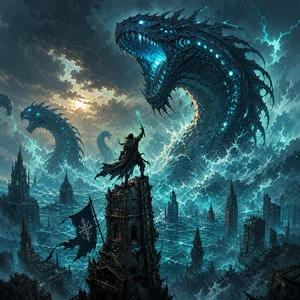 Tides of Annihilation
 Transformers
 Valorant
 Voltron
 Warhammer 40K
 Wildstar