More generators, writing tools and storytelling resources.
Why colossal knight variant names matter in Tides of Annihilation
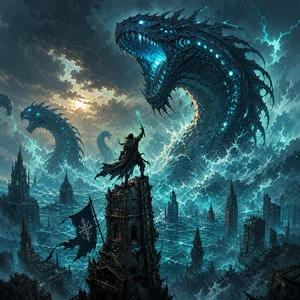
In Tides of Annihilation, a colossal knight is never just a large enemy. It is a monument that learned how to march after the kingdom died. The strongest variant names therefore need to do two jobs at once. They have to communicate scale, but they also have to suggest history, damage, and a ceremonial past that has not entirely vanished. A name like The Stone Colossus Aldwyn or Tide-Graven Lancelot sounds as if it could be painted on a cracked war chapel, shouted over a collapsing bridge, or etched into a reliquary recovered from the river mud. That blend of nobility and ruin is the heart of the aesthetic. When the title sounds too clean, the knight feels generic. When it sounds only monstrous, the Arthurian echo disappears. A strong variant name keeps both alive, the old vow and the new catastrophe, the courtly banner and the flood-blackened armor.
How to pick a variant name that feels ruined, sacred, and enormous
Begin with the scar
The best colossal knight variants often sound like they were renamed after surviving something impossible. That is why words such as Sundered, Tideworn, Rifted, Hollowed, Veiled, and Graven work so well. They imply that the knight has been altered by siege fire, drowned ritual, or contact with relic forces that should have stayed buried. Start by deciding what scar defines the encounter. Did this knight hold a breached seawall until salt petrified its limbs? Did it kneel beneath a shattered Grail engine? Did it emerge from a drowned station carrying a chapel door as a shield? If you know the wound, you can choose a name that feels inevitable instead of decorative. Hart Sundered Galahad suggests a once-noble guardian cracked down the center. Void Colossus Bedivere implies a knight that no longer serves a court, only the hollow after it.
Use the middle term to signal scale
In this naming style, the middle word is where you tell the player how the giant moves through the world. Colossus feels mythic and blunt. Sentinel implies watchfulness and lingering duty. Paladin suggests a surviving fragment of oath and doctrine. Warden feels territorial, as if the knight still believes it owns a gate, a causeway, or a royal tomb. Reaver pushes the name toward aggression, useful for variants built around relentless charges. Titan makes the knight sound less human and more geological, as if it belongs to the skyline. Choose the central title based on encounter design. A slow boss guarding a relic vault benefits from Sentinel or Warden. A battlefield terror that crashes through ruined buses and chapel walls may need Colossus or Titan. The central title should tell the player whether this giant is a watcher, a pilgrim, an executioner, or the last unmoving law in a city that has forgotten law.
Let the final name carry the Arthurian echo
The personal name is what roots the variant in the broken legend. Galahad, Gawain, Pellinore, Bedivere, Lamorak, and similar names immediately place the knight inside a fallen chivalric tradition, but the added descriptors keep the result from feeling like plain reference. The goal is not to copy a canon hero. It is to suggest that the memory of round table myth has splintered into war machines, regional saints, and corrupted battlefield epithets. If you want a variant to feel mournful, use a gentler personal name beside harsher modifiers. If you want it to feel tyrannical, combine a heavy title with a regal or severe ending. The contrast is what gives the final result dramatic weight.
What these names imply about faction identity and worldbuilding
Variant names can also tell you who still remembers the knights and how they are spoken of. Survivors, scavenger orders, relic priests, and rebellious borough militias would not all describe the same giant in the same way. A cathedral keeper may call it The Dawn Colossus Armand, treating it as a relic of holy defense. Dockside mercenaries may shorten the same legend to Storm Colossus Blaise and care only about the destruction it causes during king tide. Resistance cells might preserve old honorifics as an act of defiance, while cultists twist them into doom titles. When you choose a name, think about who coined it, who fears it, and who still believes it can be redeemed. That perspective adds social texture before a single line of dialogue appears.
Tips for writers and game masters
- Pair every generated name with one visible silhouette detail, such as a chapel bell chained to the shoulder or a bridge tower fused into the back.
- Decide whether the knight was once revered, feared, or forgotten, because that changes how NPCs pronounce the title.
- Match the variant name to one signature attack, for example tidal shockwaves, broken-lance charges, ash beams, or cathedral-bell summons.
- Use different naming tones for different districts so drowned royal wards sound distinct from rail catacombs or market ruins.
- Keep one honorable name and one corrupted name for the same giant if you want competing factions to frame the encounter differently.
Inspiration prompts for your next colossal knight
Use these questions to turn a strong name into an encounter, a legend, or a mission objective.
- What ruined landmark does this knight still patrol, and why has it never abandoned that route?
- Which broken oath or failed coronation transformed the knight into a variant feared across the city?
- What relic is fused into the armor, and how does that relic change the knight's movement, voice, or powers?
- Who among the living still speaks the knight's older, more honorable name?
- Does destroying this giant save the district, or does it remove the last barrier holding back something worse?
Frequently Asked Questions
These answers cover the most common questions about using the Colossal Knight Variant Name Generator for ruined Arthurian battles, bosses, and worldbuilding.
How does the Colossal Knight Variant Name Generator work?
It draws from an original pool of grim, chivalric, and apocalyptic naming elements so each result feels suited to a towering knight variant in a shattered Arthurian setting.
What makes a name feel right for Tides of Annihilation?
The strongest results combine knightly honor, ruin, and elemental devastation, so the title sounds both ceremonial and battle-scarred.
Can I use these names for bosses and elite enemies?
Yes. They are especially useful for boss encounters, variant enemies, relic guardians, and legendary machines that need a memorable on-screen title.
Are the names tied to Arthurian lore?
They are inspired by ruined Arthurian imagery and chivalric echoes, but they are broad enough to support original fiction, campaigns, and custom settings.
How should I choose the best generated result?
Pick the name that matches the knight's silhouette, signature attack, faction history, and emotional role in the scene, then build encounter details around that core impression.
What are good TOA colossal knight variant names?
There's thousands of random TOA colossal knight variant names in this generator. Here are some samples to start:
- Hart Sundered Galahad
- Tide-Graven Lancelot
- The Dawn Colossus Armand
- Wyvern Colossus Emrys
- Void Colossus Bedivere
- Obsidian Colossus Graham
- Moon Colossus Pellinore
- Storm Colossus Blaise
- Frost Colossus Alaric
- The Stone Colossus Aldwyn
About the creator
All idea generators and writing tools on The Story Shack are carefully crafted by storyteller and developer Martin Hooijmans. During the day I work on tech solutions. In my free hours I love diving into stories, be it reading, writing, gaming, roleplaying, you name it, I probably enjoy it. The Story Shack is my way of giving back to the global storytelling community. It's a huge creative outlet where I love bringing my ideas to life. Thanks for coming by, and if you enjoyed this tool, make sure you check out a few more!

 Saved ideas
  Alien: Earth
 Apex Legends
 Assassin's Creed
 Babylon 5
 Battlestar Galactica
 Clair Obscur
 Cyberpunk 2077
 Cyberpunk RED
 Cyberpunk
 DC Universe
 Destiny
 Dieselpunk
 Doctor Who
 Dune
Dune Dystopia
 Eclipse
 EVE Online
 The Expanse
 Fallout
 Fortnite
 Halo
Halo Helldivers
 Horizon Zero Dawn
 Invincible
 Lancer
 Marvel Universe
 Mass Effect
 Mecha
Mecha No Man's Sky
 Overwatch
 Shadowrun
 Space Opera
 Split Fiction
 Star Trek
 Star Wars
 Starfinder
 Stargate
 The Culture
 The Last of Us
 Things from the Flood
 Tides of Annihilation
 Transformers
 Valorant
 Voltron
 Warhammer 40K
 Wildstar