More generators, writing tools and storytelling resources.
Mongol tumen names and their setting
A tumen is commonly described as a decimal military formation nominally associated with ten thousand troops, although real campaign strength could vary. In fiction and game design, the word immediately suggests scale, mobility, disciplined command, and a society organized around mounted warfare. A convincing name should therefore do more than sound fierce. It should imply how the formation is recognized, where it rides from, who commands it, what resources keep it moving, and what enemies remember after meeting it. The names in this generator are creative constructions, not claims about documented historical unit titles. They use familiar steppe imagery and military functions to help a fictional formation feel rooted in a believable world.
Building a convincing tumen identity
Banner, command, and household
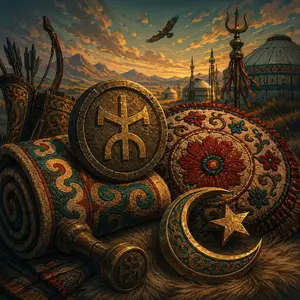
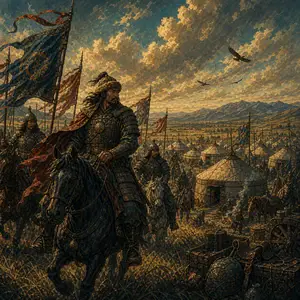
Start with the visible center of the force. A horsehair standard, colored pennon, ceremonial knot, or command banner can give the tumen a public identity that soldiers recognize at distance. The commander matters as well. A noyan's household, a khatun's guard, a royal escort, or an oath-bound council suggests who supplies the formation and whose authority it carries. Names built around a standard or command household work well when the tumen is politically important, attached to a ruling family, or expected to represent a larger confederation. They also create useful story tension when loyalty to the commander conflicts with loyalty to clan, empire, or homeland.
Horses, landscape, and movement
Mounted armies depend on more than riders. Remount herds, pasture, water, fodder, skilled handlers, and reliable routes determine how far a formation can travel. A name tied to the Orkhon, Onon, Kerulen, Selenge, Altai, Khangai, Gobi, a hidden ford, or a winter pass can connect the unit to a real or fictional frontier. Horse-centered names can emphasize speed, endurance, breeding grounds, foaling camps, or a famous remount line. Landscape names are especially useful when several tumens share one ruler, because each formation can carry a distinct regional memory without needing an elaborate invented title.
Tactics, signals, and reputation
A tumen may be remembered for what it does rather than where it comes from. Feigned retreat, encirclement, sudden counterturns, night relays, signal fires, scouting screens, and disciplined pursuit all offer strong naming material. Such names turn battlefield behavior into reputation. They can also mislead: a force called the Vanishing Line might be genuinely skilled at withdrawal, or it might preserve the memory of one famous victory while hiding later failures. Signal and night-watch names fit units that coordinate distant wings, guard communication routes, or specialize in moving before dawn. Winter names imply endurance, harsh logistics, and a campaign culture shaped by cold.
How to use the generated names
Treat each result as the beginning of a military profile. Decide whether the name is an official title, a translation used by outsiders, a nickname earned in one campaign, or a later chronicler's label. Then attach the formation to a commander, banner design, homeland, favored horses, and signature maneuver. The generator separates masculine and feminine command-inspired pools for creative variety, not as a rigid historical classification. Any result can be reassigned, altered, or blended. A unit led by a khatun might carry a severe winter title, while a noyan's force might be known for an embroidered standard or a river queen legend.
Practical naming tips
- Choose one dominant idea, such as a banner, animal omen, river, horse herd, tactic, or season.
- Keep the spoken rhythm clear enough for messengers, scouts, rivals, and chroniclers to repeat.
- Distinguish an official title from the shorter nickname soldiers use around the campfire.
- Link the name to a visible emblem, color, tassel, animal, weapon, or pattern on the standard.
- Give the tumen one logistical strength, such as remount depth, winter pasture, or relay stations.
- Avoid presenting an invented result as a verified historical designation when writing nonfiction.
Questions for deeper inspiration
A strong unit name becomes more useful when it points toward people, places, and consequences. Use these questions to turn a generated phrase into a formation with history.
- Who first carried the banner, and what promise did that person make?
- Which river, pass, pasture, or frontier does the formation call home?
- What tactic made enemies recognize the tumen before seeing its standard?
- How are remounts gathered, protected, and replaced during a long campaign?
- What private nickname do the riders use that outsiders never hear?
- Which defeat, feud, or broken oath complicates the public legend?
How does the Mongol Tumen Generator work?
Each click selects a randomized name from themed pools shaped around banners, command households, horse culture, steppe geography, omens, tactics, and campaign conditions. The result is ready to use or adapt for your setting.
Can I steer the Mongol Tumen Generator toward a specific name angle?
Re-roll until the tone moves toward the angle you need, such as a river crossing, winter march, khatun household, signal network, or feigned retreat. You can also combine parts from several results.
Are the names original and safe to use?
The names were written specifically for this generator rather than copied from a historical roster. You may use or adapt them in personal projects and in most commercial creative work, while checking any separate platform requirements.
How many names can I generate?
You can keep re-rolling whenever you need another direction. Use repeated rolls to compare tones, assemble related formations, or find a name that fits a particular commander, banner, homeland, or campaign.
How do I save the names I like?
Use the copy control to place a result on your clipboard, or select the heart icon to save a favorite. Keeping several candidates together makes it easier to compare imagery, rhythm, and setting fit.
What are good Mongol Tumen Names?
There's thousands of random Mongol Tumen Names in this generator. Here are some samples to start:
- Altan Standard Tumen
- Tumen of the Black Wolf
- Cloudborn Orkhon Ford Host
- The Dawn Remount
- Grey Noyan's Guard Tumen
- Altan Khatun's Standard Tumen
- Tumen of the Black Mare Herd
- Cloudborn White Swan Host
- The Dawn River Queen
- Grey Embroidered Banner Riders
About the creator
All idea generators and writing tools on The Story Shack are carefully crafted by storyteller and developer Martin Hooijmans. During the day I work on tech solutions. In my free hours I love diving into stories, be it reading, writing, gaming, roleplaying, you name it, I probably enjoy it. The Story Shack is my way of giving back to the global storytelling community. It's a huge creative outlet where I love bringing my ideas to life. Thanks for coming by, and if you enjoyed this tool, make sure you check out a few more!

 Saved ideas