More generators, writing tools and storytelling resources.
Fictional counterfeit money as a story engine
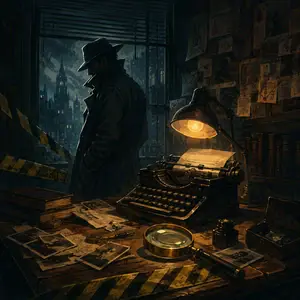
Counterfeit currency works well in crime fiction because it moves through ordinary hands. A false bill can begin with a cashier, a charity jar, a traveling salesman, a bank examiner, or a child buying cake. The crime touches people who may not know they are part of it, which makes every prompt useful for pressure rather than procedure. These ideas focus on suspicious bills, flawed field notices, market rumors, private debts, crew distrust, and public panic. They are designed for fictional investigations, not practical forgery.
How to use these prompts
Start with the bill's journey
Ask where the note first appears, who accepts it, who refuses it, and who loses trust because of it. A small denomination might point to petty errands, while a large note can create public fear. A paper trail can lead to a closed mill, a hotel ledger, a church envelope, or a school fundraiser. The best prompt usually contains both a clue and a consequence, so let the bill change relationships before it solves the case.
Build the investigation around consequences
Rather than explaining how a counterfeit is made, center the plot on who is blamed, who profits from panic, and who cannot afford to be wrong. A treasury memo might mislead local merchants. A wanted poster might turn the wrong face into public enemy number one. A market scare might hurt honest vendors before any criminal is caught. This keeps the story dramatic without turning it into instruction.
Choose a tone and setting
The same prompt can become historical noir, small-town mystery, pulp adventure, urban thriller, or tabletop clue chain. Era markers such as handwritten ledgers, telegram delays, ration books, arcade cash boxes, or pre-digital banking change what witnesses remember and what proof exists. Regional details add texture: docks, depots, county fairs, fishing harbors, mill towns, and border markets all change how bad money travels.
Context, ethics, and genre weight
Counterfeit-money stories often tempt writers toward clever tricks. The stronger route is usually human. False bills create shame for clerks, suspicion between neighbors, pressure from handlers, and losses for people who never joined the scheme. Treat the crime as a narrative device for trust, class, reputation, and survival. Keep operational details vague, and let the suspense come from pursuit, motive, misdirection, and damage.
Practical tips for adapting a result
- Decide who first touches the suspicious bill and what they stand to lose.
- Turn the treasury memo, field notice, or warning poster into imperfect evidence.
- Use denomination as a clue to social scale, not as a technical puzzle.
- Let at least one innocent merchant, clerk, or customer suffer a real consequence.
- Give the counterfeit crew a private rule, fear, or betrayal that can break the case.
- Anchor the scene with a register bell, wet paper, cigar smoke, market noise, or another sensory cue.
Questions to spark the next scene
After you roll a prompt, use it as the first knot in a larger case. A good next question should create action, pressure, or a moral choice.
- Who benefits if the town blames the wrong passer?
- Which honest person has the strongest reason to hide the bill?
- What public warning makes the situation worse instead of safer?
- Where did the suspicious note travel before the story began?
- What private debt makes a small false bill feel dangerous?
- What would the investigator lose by revealing the truth today?
How does the Counterfeit Currency Generator work?
It combines fictional crime writing angles such as suspicious denominations, field notices, market circulation, paper trails, and human motives. Each roll returns a self-contained prompt that can become a case, scene, subplot, or character problem.
Can I steer the Counterfeit Currency Generator toward a specific prompt angle?
Yes. Re-roll until a prompt leans toward the kind of story you want, then combine details from several results. A treasury memo, a market rumor, and a private debt can easily become one stronger premise.
Are the prompts original and safe to use?
The prompts are written for this generator and intended for fiction, games, and creative planning. They avoid practical counterfeiting instruction and can be adapted for personal projects and most commercial storytelling contexts.
How many prompts can I generate?
You can keep re-rolling whenever you need another angle. Use one result as a quick spark, or gather several to build a larger investigation, suspect list, or chain of consequences.
How do I save the prompts I like?
Use click-to-copy for any prompt you want to move into notes, drafts, or planning boards. The heart or save icon helps you keep promising results together while you compare them.
What are good Counterfeit Currency Prompts?
There's thousands of random Counterfeit Currency Prompts in this generator. Here are some samples to start:
- A widowed shopkeeper suspects the same false five-dollar note is moving through three family businesses before payday.
- A bank teller rejects one two-dollar note and triggers a quarrel that reveals a missing ledger.
- A pawnshop owner refuses suspicious bills, then sees them accepted at the jeweler next door within minutes.
- In Louisiana parish markets, false bills travel with seasonal workers whose real crime may be trusting the wrong paymaster.
- Children collect warning handbills like trading cards until one poster names their teacher.
- False money in the silent-film craze matters less than the rumor that the government has lost control.
- The first false bill is spent on a child's birthday cake, turning a small celebration into a townwide search.
- A disgraced treasurer demands the crew pass more bad bills, even after the treasury notice names their pattern.
- A wedding band is paid in bad notes, and the counterfeit crew realizes its smallest bill did the greatest damage.
- The trace of rain-softened paper clings to a false bill and places the passer at the scene more clearly than any witness.
About the creator
All idea generators and writing tools on The Story Shack are carefully crafted by storyteller and developer Martin Hooijmans. During the day I work on tech solutions. In my free hours I love diving into stories, be it reading, writing, gaming, roleplaying, you name it, I probably enjoy it. The Story Shack is my way of giving back to the global storytelling community. It's a huge creative outlet where I love bringing my ideas to life. Thanks for coming by, and if you enjoyed this tool, make sure you check out a few more!

 Saved ideas