More generators, writing tools and storytelling resources.
Why reading nooks became a design language
Reading nooks sit at the crossroads of furniture design, literary fantasy, and domestic ritual. Older houses used window seats, inglenooks, and alcove benches to turn awkward architecture into protected places for sewing, conversation, and private reading. Libraries and studies later refined the idea with deep chairs, task lamps, side tables, and shelves kept within arm's reach. In the last two decades the reading nook became even more visible through Pinterest boards, BookTok room tours, slow-living blogs, and apartment makeover videos. A reading corner now signals more than book storage. It implies a relationship to attention. It suggests slowness, taste, self-soothing, and sometimes aspiration. A velvet chair by a fireplace communicates one kind of reader. A cane bench in bright plant light communicates another. Because the nook is small, every choice matters: the chair silhouette, the softness of the throw, the temperature of the bulb, and whether the books look curated, battered, borrowed, or constantly reread.
How to build a reading nook that feels real
Start with the seat, not the accessories
The seat is the anchor. A spindle chair creates alert posture and a little romantic stiffness. A deep armchair says the reader disappears for hours. A window bench turns architecture itself into furniture, while a floor cushion corner feels younger, softer, and more improvised. Before adding candles or art, decide how the body lives in the nook. Are legs tucked under a blanket? Is there room for a mug? Does the reader perch, lounge, curl up, or annotate at a side table?
Give the light a job
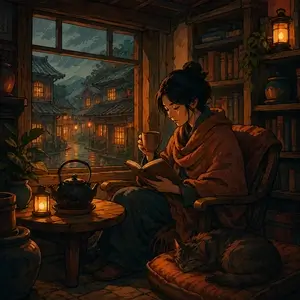
The best reading corners understand lighting as behavior. Morning nooks can use pale daylight and linen curtains that soften contrast. Evening nooks need amber pools from a floor lamp, sconce, or pleated shade so the corner feels separate from the rest of the room. A reading nook that depends only on harsh overhead light rarely feels intimate. Good light also changes the implied genre. Cool glassy light suits essays and city apartments. Firelight and brass lamps push the nook toward classics, winter rereads, and inward moods.
Add proof objects instead of filler
The strongest nooks include evidence of a person. A mug ring on the side table, a bookmark tray, a pencil tucked into a paperback, a basket for borrowed books, headphones for rain playlists, an extra pair of socks, or a folded letter on the desk all tell a richer story than generic decor. Proof objects show routine. They explain why this corner exists and why someone returns to it.
What a reading nook says about identity
A reading nook works almost like a miniature portrait. It can reveal class signals, nostalgia, discipline, softness, ambition, and even the preferred speed of thought. A built-in bench with labeled shelves reads differently from a thrifted chair beside an unstable stack of novels. One corner suggests order and long-term planning. Another suggests improvisation, sentiment, and a habit of bringing books home faster than storage can keep up. This makes reading nooks useful in fiction and visual storytelling. A character who reads by a bright conservatory bench is not framed the same way as one who hides beneath attic beams or keeps a midnight chair beside blackout curtains. Even tiny choices matter. Florals can make a nook feel inherited or theatrical. Black shelving can make it urban and composed. Knit textures, tartan, and cedar can make it lodge-like and seasonal. The nook becomes a readable fragment of personality before anyone speaks.
Tips for writers, decorators, and moodboard builders
- Choose the seat shape first and let every other decision support the body position that seat invites.
- Use no more than three main material families, such as linen, wood, brass, boucle, leather, or wicker, so the corner reads as intentional.
- Light the nook at human level with a floor lamp, wall sconce, or table lamp instead of relying on ceiling light alone.
- Add proof objects that imply habit, such as a teacup, pencil, library card, headphones, folded blanket, or basket of current reads.
- Think about the soundtrack of the space. A playlist title, rain on glass, kettle noise, or fire crackle changes how the corner is imagined.
- If the nook belongs to a character, ask what kinds of books are within reach and what that says about comfort, ambition, or escape.
Inspiration prompts
Use these questions to turn a generator result into a full design brief, a scene description, or a visual story with stronger emotional logic.
- Is this nook built for dawn, rain, snow, blue hour, or the hour when the rest of the house has gone quiet?
- What single object would reveal the reader faster than any shelf styling, a mug, pencil, blanket, letter, lamp, or half-finished notebook?
- Does the corner belong to someone who rereads beloved books, chases new releases, studies seriously, or escapes into comfort fiction?
- How does the lighting shape the mood: filtered daylight, amber pool, fire glow, city reflection, or moonlit quiet?
- If this nook appeared in a novel or film, what would it tell the audience before the character ever sat down?
Frequently Asked Questions
Explore the most common questions about the Cozy Reading Nook Generator and how it can help you plan room corners, moodboards, captions, and believable bookish spaces.
How does the Cozy Reading Nook Generator work?
Each click gives you one compact reading-corner brief built from seating, blanket texture, lighting mood, nearby books, and a playlist title that ties the atmosphere together.
Can I use the results for a specific room style?
Yes. The library ranges from attic hideaways and fireplace corners to apartment windows, coastal benches, conservatories, and midnight reading chairs, so you can adapt the result to many interiors.
Are the reading nook ideas varied enough for repeated use?
Yes. The prompts vary by architecture, seat type, textile feel, light source, shelf behavior, and emotional register, which keeps repeated clicks from collapsing into the same corner.
How many reading nook ideas can I generate?
You can generate as many as you want, which makes the tool useful for home styling, visual writing prompts, social posts, set dressing, and character-room worldbuilding.
How do I save a favorite reading nook result?
Click a result to copy it instantly, or use the heart icon to save a shortlist while you compare lamp moods, chair shapes, blanket textures, and shelf details.
What are good Cozy reading nooks?
There's thousands of random Cozy reading nooks in this generator. Here are some samples to start:
- Tuck a spindle chair by the bay window, add oat wool, and title the playlist "First Light Pages."
- Carve out an attic eave corner with a velvet chair and the playlist "Rain on the Rafters."
- Gather a fireplace chair in moss velvet, a tartan throw, and "Embers Between Chapters."
- Gather rose chintz cushions, a lamp, and steeping tea under "Pages Beside the Teapot."
- Frame a burgundy leather chair with dark shelves and "Midnight Underlining Society" above the desk.
- Position a wicker chair among ferns, add soft linen, and name the playlist "Greenhouse Page Pause."
- Position a boucle chair by the apartment window and title the playlist "City Noise, Soft Pages."
- Position a whitewashed chair by the sea-facing window and title the playlist "Salt Air Chapters."
- Position a deep plaid chair by the cabin window and title the playlist "Snowdrift Chapter Club."
- Position a velvet chair under the floor lamp and title the playlist "Midnight Shelf Glow."
About the creator
All idea generators and writing tools on The Story Shack are carefully crafted by storyteller and developer Martin Hooijmans. During the day I work on tech solutions. In my free hours I love diving into stories, be it reading, writing, gaming, roleplaying, you name it, I probably enjoy it. The Story Shack is my way of giving back to the global storytelling community. It's a huge creative outlet where I love bringing my ideas to life. Thanks for coming by, and if you enjoyed this tool, make sure you check out a few more!

 Saved ideas
  Academia
 Aesthetic
 AI Tools
 Beauty
 Beer
Beer Business
 Call of Duty
 Calligraphy
 Cars
Cars Code
Code Coffee
 Cosplay
 Cottagecore
 Cozy
Cozy Crafts
 Fashion
 Festivals
 Food
Food Handles
 Holidays
 Mixology
 Music
Music Office
 Parenting
 Party
Party Podcasting
 Productivity
 Professions
 Project Management
 Ships
Ships Sports
 Tattoo
 Tech Events
 TV
TV Twitch
 Wedding
 Witchy
 Wrestling