
Copied!
Story apps Take your next step in the Story Shack suite.
 Saved ideas
 See previous results (<% accordionPreviousResults.length %>)
Copied!
Explore Story Shack
More generators, writing tools and storytelling resources.
Explore more from Wellness
- Daily journal prompts
- Mental Health Check In
- CBT Prompt Generator
- Gratitude journal prompts
- Self-care Sunday plans
- Shadow work prompts
- Hospital Disease Names
- Medicine names
- Massage Style
- Chakra Alignment
- Aromatherapy blends
- DBT Prompt Generator
- Meditation mantras
- Crystal Healing Session Briefs
- Manifestation affirmations
Discover even more random name generators
Explore all Writing
Skip list of categories












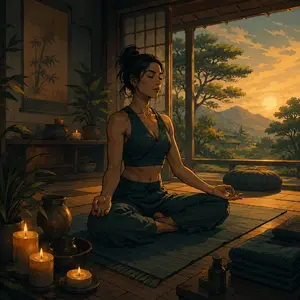


Where Mantras Come From and What This Generator Is Actually Making
The word mantra comes from Sanskrit and is often explained as an instrument of thought or a tool for the mind. In Hindu, Buddhist, Jain, and Sikh traditions, mantras can be sacred syllables, invocations, names of deities, doctrinal phrases, or disciplined recitations linked to breath, posture, memory, and devotion. That history matters. A mantra is not just any nice sentence spoken twice. It usually belongs to a lineage, a sound system, and a ritual context. This generator takes a narrower modern approach. It creates short English practice lines meant for steady breathing, self-regulation, focus, courage, gratitude, grief work, or reflective journaling. They are contemporary mantras in the wellness and writing sense, not substitutes for traditional liturgical mantras. That distinction lets you use the lines respectfully while still benefiting from repetition, rhythm, and intention.
Choosing and Using a Mantra
Match the state, not the fantasy
The most useful mantra is rarely the grandest one. Start with the emotional state you need help entering: calm before sleep, focus before a work block, courage before a hard conversation, release after conflict, tenderness during grief, or presence when your attention keeps scattering. A line that fits the nervous system you actually have will stick longer than a heroic statement you reject on first contact. If you are tense, choose steady language. If you are exhausted, choose permission. If you are flooded, choose one line with clear edges and no extra decoration.
Build the breath into the phrase
Good mantras have a physical cadence. Read the line aloud once and notice where the lungs want to pause. Many people naturally place one half of the sentence on the inhale and the second half on the exhale, or use the whole line across one slow exhale. That matters because rhythm turns language into practice. A sentence that looks fine on the page can fail in the body if it is too long, too abstract, or too tangled. The best mantra is one you can say when tired, anxious, busy, or emotional. If a line feels crowded, shorten it. If it feels hollow, add one concrete word such as breath, room, hand, morning, light, or voice.
Repeat long enough to notice behavior
Repetition is not magic by itself. The value of a mantra shows up when it changes what you do next. A calming line might slow your speech, unclench the jaw, or stop you from sending one reactive message. A work mantra might get you through the first fifteen minutes of resistance. A grief mantra might let you stay present with memory instead of immediately numbing out. Use one line for a few days before replacing it. Write it in a notebook, put it on your phone lock screen, pair it with walking, tea, breathwork, or the first minute at your desk. When the phrase starts shaping action, it is no longer just language.
Identity, Memory, and Cultural Weight
Mantras sit in an unusual space between sound, belief, and identity. Traditional mantras often carry theological meaning, ritual authority, and communal memory. Modern self-guiding mantras carry something different but still powerful: they train attention. Repeat a sentence often enough and it begins to sound like the kind of life you expect to live. That is why secular mantra practice can support therapy, coaching, creative routines, athletic preparation, recovery work, and spiritual reflection. It is also why respect matters. If you want a line from a specific religious tradition, study it in that tradition, learn its pronunciation, and understand its context. If what you want is a flexible English phrase for everyday grounding, use a modern mantra like the ones in this generator and keep the distinction clear.
Tips for Writers, Coaches, and Ritual Builders
- Choose one intention per session, such as calm, focus, courage, grief, gratitude, rest, or creative risk, so the language stays coherent.
- Say the line aloud before saving it. If you stumble over the rhythm, the body is telling you the mantra needs trimming.
- Pair the phrase with a repeated cue, such as first light, tea steam, a hand on the desk, a walk, or the moment before sleep.
- For fiction, give each character a mantra that reveals coping style, worldview, class background, or spiritual training rather than only sounding wise.
- For journaling, repeat the mantra once, then write one paragraph about the action it invites today, not the fantasy it promises someday.
- Refresh your mantra when your season changes. A line for survival, a line for ambition, and a line for grief do different jobs.
Inspiration Prompts
If you want a mantra that feels personal rather than decorative, ask yourself a few grounded questions before generating another round.
- What state do you need in your body right now: steadiness, courage, softness, grief room, creative fire, or simple presence?
- Where will you repeat the line most honestly: in bed, at the sink, on a walk, before writing, or after conflict?
- Does the phrase sound like something your future self would actually say under pressure?
- Which one concrete word, such as breath, light, hands, room, night, or truth, makes the line feel embodied?
- What small action would prove the mantra is working by the end of today?
Frequently Asked Questions
Explore the most common questions about modern mantra practice and how this generator can help you find a usable line for your day.
How does the Mantra Generator work?
It serves short English mantra lines shaped for breath, focus, calm, courage, grief work, and reflection, so you can keep generating until one matches the state you need.
Can I generate mantras for calm, focus, or courage specifically?
Yes. Generate several rounds, keep the lines that fit your immediate goal, and build a small set for one situation such as work, sleep, grief, or difficult conversations.
Are these traditional Sanskrit or liturgical mantras?
No. These are contemporary English practice lines inspired by mantra rhythm. If you want a sacred mantra from a living tradition, study it within that tradition and learn its context.
How many mantras can I generate?
You can generate as many as you want. Most people save a handful that fit their current season, then rotate them when the emotional need or ritual changes.
How do I save the mantras that resonate most?
Copy the line into a notes app, journal, phone lock screen, or sticky note, then place it where your routine already returns so repetition becomes natural.
What are good Daily mantras?
There's thousands of random Daily mantras in this generator. Here are some samples to start:
- At first light I gather my thoughts and begin with a steady breath.
- Inhale peace, exhale strain
- my body remembers how to soften.
- Courage enters quietly when I stop waiting to feel fearless.
- Now I release what is finished and keep the wisdom it left behind.
- Daily, I return to the craft and let consistency build what moods cannot.
- Tonight, night invites me to unclasp the day and return to quiet.
- Wave by wave, grief moves and I learn to breathe.
- Play invites ideas back when I stop forcing brilliance.
- Within me, I trust my inner no as much as my generous yes.
- Today I notice enough beauty to remember life is happening now.
About the creator
All idea generators and writing tools on The Story Shack are carefully crafted by storyteller and developer Martin Hooijmans. During the day I work on tech solutions. In my free hours I love diving into stories, be it reading, writing, gaming, roleplaying, you name it, I probably enjoy it. The Story Shack is my way of giving back to the global storytelling community. It's a huge creative outlet where I love bringing my ideas to life. Thanks for coming by, and if you enjoyed this tool, make sure you check out a few more!
Embed on your website
To embed this idea generator on your website, copy and paste the following code where you want the widget to appear:
<div id="story-shack-widget"></div>
<script src="https://widget.thestoryshack.com/embed.js"></script>
<script>
  new StoryShackWidget('#story-shack-widget', {
    generatorId: 'mantra-generator',
    generatorName: 'Mantra Generator',
    generatorUrl: 'https://thestoryshack.com/tools/mantra-generator/',
    language: 'en'
  });
</script>