
Copied!
Story apps Take your next step in the Story Shack suite.
 Saved ideas
 See previous results (<% accordionPreviousResults.length %>)
Copied!
Explore Story Shack
More generators, writing tools and storytelling resources.
Explore more from Writing Craft
- Letters
- Sentences
- Character profiles
- Book titles
- Nouns
- Questions
- Plot ideas
- Business headlines
- Words
- Blog post titles
- YouTube video titles
- Story titles
- Instagram bio ideas
- Instagram caption ideas
- Themes
- Resignation letters
- Adjectives
- LinkedIn post prompts
- Villain names
- Yearbook quotes
- Phrases
- News headline ideas
- Quotes
- Epitaph ideas
- Paragraphs
- Idioms
- Conspiracy theories
- Etsy listing titles
- Genres
- Verbs
- Urban legends
- Coming out stories
- Movie genres
- Documentary titles
- Apology scripts
- Tabloid headline ideas
- Reception toasts
- Ethnicities
- Reel Hook
- Out-of-Office replies
- Op-Ed Title
- Three-act outlines
- Tragic backstories
- Non-binary characters
- Shorts Hook Brief
- Genders
- Catchphrase ideas
- Pinterest Pin Title
- Funeral Eulogy Generator
- Hero's journey prompts
- Character motivations
- Villain motivations
- Family tree stories
- Character personalities
- Cover letter openers
Discover even more random name generators
Explore all Writing
Skip list of categories
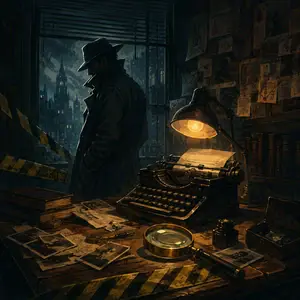
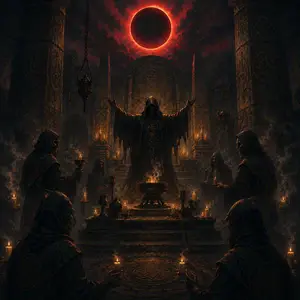
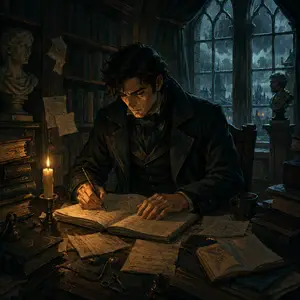
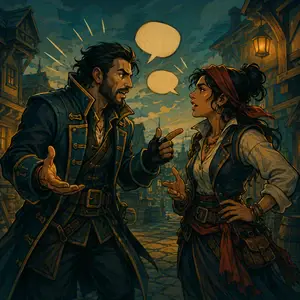
Why Antagonists Matter to Story Structure
Antagonists are not just villains in dark clothing. They are the force that prevents the central desire from being achieved easily, and that function appears everywhere: in mythic epics, domestic novels, crime stories, political thrillers, and intimate romances. The strongest antagonists do not merely oppose action, they define the shape of the conflict. A usurper can turn a court drama into a study of legitimacy. A controlling parent can turn a love story into a battle over identity. A corporate executive can make a workplace plot feel like a moral siege. When the antagonist is specific, the story's pressure becomes specific too. Readers stop asking who the bad guy is and start asking how far each side will go. That shift is where narrative heat comes from.
How to Build an Opponent Worth Following
Start with the belief, not the costume
The quickest way to flatten an antagonist is to begin with aesthetics alone. Cloaks, scars, smirks, and elegant monologues can be fun, but they do not create durable conflict. Start with the belief that lets the antagonist sleep at night. Maybe they think order matters more than freedom. Maybe they believe love always decays unless controlled. Maybe they genuinely see themselves as the only adult in a room full of dreamers. Once that inner logic is clear, the rest follows naturally. Their tactics become consistent, their blind spots become visible, and their dialogue gains the force of conviction rather than the emptiness of generic menace.
Choose the pressure point they attack
An effective antagonist presses on the exact place where the protagonist is weakest. If the hero fears abandonment, the antagonist isolates them. If the hero depends on public trust, the antagonist engineers shame. If the hero needs community, the antagonist fractures the group. This is why so many memorable rivals feel personal even when their schemes are large. They are not only trying to win, they are trying to make the hero lose in the most revealing way possible. When you use this generator, look at each brief and ask which wound, ideal, or need it threatens. That answer tells you whether the antagonist belongs in your current project.
Let escalation come from pressure, not randomness
Escalation works best when it feels like the next logical move for this exact person. A desperate prosecutor leaks evidence because she trusts narrative more than justice. A frontier mayor hoards water because scarcity already taught him that fairness is a luxury. A moon cult leader becomes deadly because every unanswered question sounds like rebellion in her head. Those actions escalate the plot, but they also deepen characterization. If a scene could be replaced by any other cruel act, the antagonist still needs sharper design. Aim for choices that reveal both capability and worldview at once.
The Moral Weight of an Antagonist
Antagonists shape theme because they embody an argument. They say security is worth cruelty, that ambition excuses collateral damage, that loyalty justifies surveillance, or that love permits possession. The hero does not only defeat them physically or strategically. The hero has to answer that argument. This is why antagonists with a coherent rationale feel heavier on the page than purely chaotic threats. They force protagonists to clarify what they believe about mercy, power, class, duty, truth, or belonging. Even in genres full of spectacle, the lasting conflict is usually moral before it is tactical. A memorable antagonist therefore needs both harm and meaning.
Tips for Writers Using This Generator
- Identify what your protagonist wants most, then choose a brief that naturally blocks that desire rather than merely inconveniencing it.
- Translate the antagonist's logic into daily behavior. How do they reward loyalty, interpret weakness, and explain harm to themselves?
- Give them a domain they understand better than the hero, such as law, ritual, logistics, media, or family history.
- Decide what would finally crack them. A breaking point is often more revealing than a signature threat.
- Let side characters have mixed feelings about them. Fear alone is less interesting than dependence, admiration, or reluctant agreement.
- Revise any brief that makes the antagonist right too easily or monstrous too vaguely. Precision is what keeps them vivid.
Inspiration Prompts for Sharpening the Conflict
Use these questions to turn a generated brief into scenes, dialogue, and long-form stakes.
- What private event taught this antagonist that control, punishment, or secrecy was the safest option?
- Which public role lets them disguise personal obsession as duty, reform, faith, professionalism, or love?
- What would the protagonist have to sacrifice to beat them without becoming a mirror of them?
- Who benefits from the antagonist's rule, and why do those beneficiaries defend it sincerely?
- What tiny act of mercy, if offered too late, would reveal the life this character might have lived instead?
Frequently Asked Questions
Explore the most common questions about the Antagonist Generator and how it can help you build sharper opposition for your story.
How does the Antagonist Generator work?
Each click pulls a compact antagonist brief with a goal, a method, a self-justifying logic, and a likely breaking point so you can start from conflict instead of a blank page.
Can I tailor the kind of antagonist I want?
The generator does not filter by genre on the page, but you can regenerate until you find a brief that matches your setting, then adapt the profession, scale, and tone to fit your project.
Are the antagonist ideas unique?
They are written for variety across institutions, families, belief systems, crime networks, speculative settings, and personal obsessions, so repeated clicks produce very different pressures and moral arguments.
How many antagonist briefs can I generate?
You can generate as many antagonist prompts as you want, which makes the tool useful for brainstorming several rivals before choosing the one that best challenges your protagonist.
How do I save my favorite antagonist ideas?
Click any result to copy it instantly, or use the heart icon to keep the briefs that feel closest to your protagonist, theme, or next plot turn.
What are good antagonist prompts?
There's thousands of random antagonist prompts in this generator. Here are some samples to start:
- Harbormaster shuts the river locks to starve rebels, certain famine will prevent civil war until his niece defects.
- Archivist burns land deeds to erase feudal claims, believing chaos births fairness until refugees beg for proof of home.
- Provost rigs scholarship exams against dissidents, calling it stability until his top student publishes the answer key.
- Magistrate jails unlicensed healers to protect standards, then refuses mercy when plague reaches her own block.
- Tax collector seizes winter grain to fund walls, insisting enemies are closer than hunger until villages riot.
- Bridge keeper raises tolls for every crossing, arguing roads need order until ambulances start turning back.
- Sanitation chief dumps waste into rebel wards, framing it as quarantine until his grandson drinks the runoff.
- Rail director strands a strikebound city, convinced obedience saves industry until the frozen stations fill with bodies.
- Registrar voids marriages from suspect districts, claiming fraud control until her sister loses hospital access.
- Warden privatizes the town reservoir, saying price teaches restraint until the fire reaches his estate gates.
About the creator
All idea generators and writing tools on The Story Shack are carefully crafted by storyteller and developer Martin Hooijmans. During the day I work on tech solutions. In my free hours I love diving into stories, be it reading, writing, gaming, roleplaying, you name it, I probably enjoy it. The Story Shack is my way of giving back to the global storytelling community. It's a huge creative outlet where I love bringing my ideas to life. Thanks for coming by, and if you enjoyed this tool, make sure you check out a few more!
Embed on your website
To embed this idea generator on your website, copy and paste the following code where you want the widget to appear:
<div id="story-shack-widget"></div>
<script src="https://widget.thestoryshack.com/embed.js"></script>
<script>
  new StoryShackWidget('#story-shack-widget', {
    generatorId: 'antagonist-generator',
    generatorName: 'Antagonist Generator',
    generatorUrl: 'https://thestoryshack.com/tools/antagonist-generator/',
    language: 'en'
  });
</script>